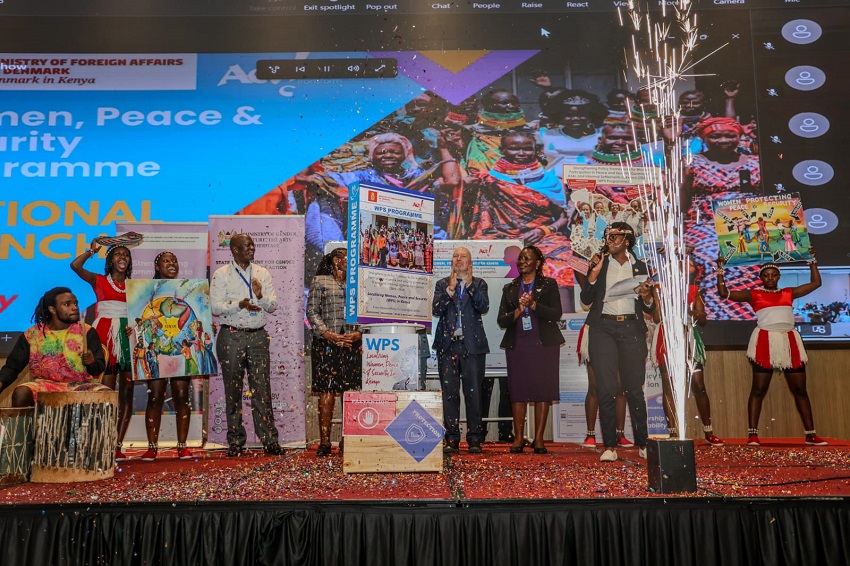
Kenya has officially launched the Strengthening Policy Frameworks for Women’s Participation in Peace and Security Governance in Arid and Semi-Arid Lands (ASAL) and Informal Settlements Programme (2026–2028).
The initiative by Act Change Transform (Act!), with the support of the Embassy of Denmark in Kenya and in partnership with the Government of Kenya through the State Department for Gender and Affirmative Action is set to be piloted across ten ASAL counties of Garissa, Samburu, Laikipia, Uasin Gishu, Elgeyo Marakwet, West Pokot, Mombasa, Kilifi, Kwale and Nairobi.

It seeks to strengthen policy frameworks and enhance the meaningful participation and leadership of women in peace and security governance across Kenya’s ASALs and informal settlements.
The programme comes at a pivotal moment for Kenya. With the 2027 General Elections approaching, communities in many ASAL counties continue to face insecurity driven by resource-based conflicts, climate change, and violent extremism. Women also continue to encounter barriers to participation in political and peace processes, despite their critical role in community mediation, conflict prevention, and social cohesion.
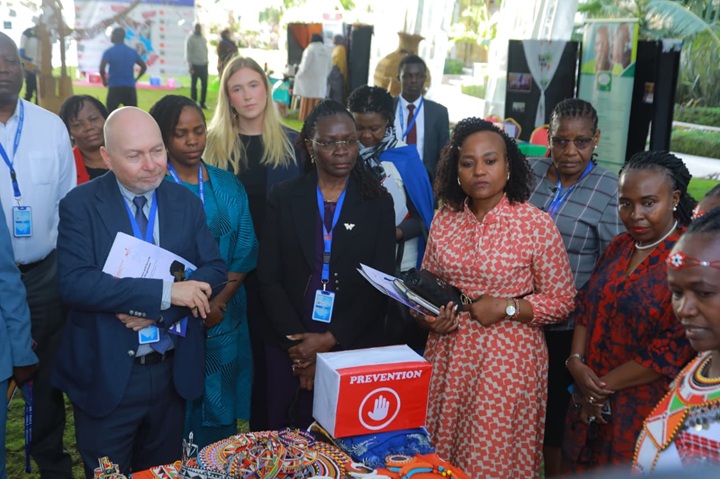
The launch convened representatives from the Government of Kenya, the Embassy of Denmark in Kenya, constitutional commissions, county governments, development partners, civil society organisations, women peacebuilders, academia, the media, and community leaders. Together, they reaffirmed their shared commitment to advancing the Women, Peace and Security (WPS) Agenda and ensuring that women are recognised not only as beneficiaries of peacebuilding efforts but also as leaders and architects of sustainable peace.
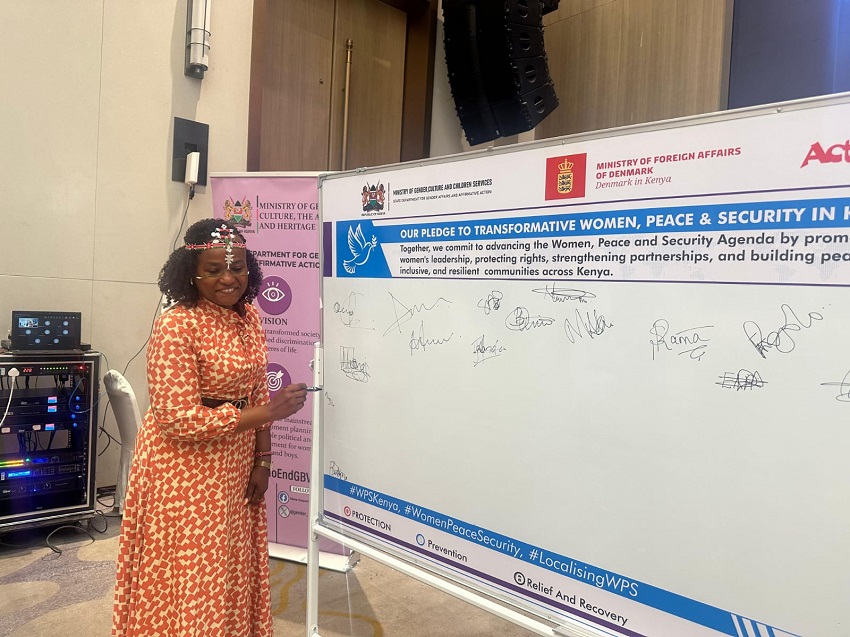
A key highlight of the event was the adoption of the Pledge for Transformative Women, Peace and Security Partnership, through which stakeholders committed to moving beyond symbolic representation towards measurable action.
The pledge calls for stronger localisation of the WPS Agenda, increased accountability, enhanced protection of women peacebuilders, and greater investment in women’s leadership and influence in peace and security decision-making processes.
The event also marked the dissemination of findings from the Baseline Survey and Contextual and Institutional Analysis, which provide an evidence base for the programme’s implementation. The studies established benchmark indicators on the status of Women, Peace and Security implementation, identified institutional and structural barriers limiting women’s participation, and generated recommendations to strengthen policy engagement, accountability mechanisms, County Action Plan implementation, and localisation of the WPS Agenda.
Four of the ten project counties (Garissa, Elgeyo-Marakwet, Mombasa and Uasin Gishu) have adopted County Action Plans, all of which were developed under the now-lapsed KNAP II and require rapid review and realignment to KNAP III as a priority early activity; the remaining six counties have no functioning CAP.
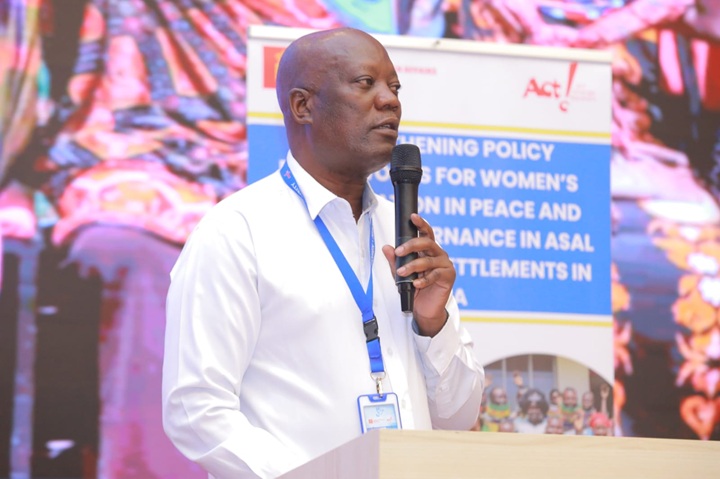
CEO ACT! Tom Were described the programme as an important investment in inclusive governance and long-term peace.
” Since our establishment, we have been working on peace-building and conflict transformation in Kenya. We’ve been working across many types of conflicts: resource conflicts, political conflicts, preventing and countering violence, extremism, but also community conflicts on different issues. And because of that focus of our work, we started having a discussion a few years back with the embassy of Denmark on how to strengthen the inclusion and involvement of women on matters of peace. And we find this a useful strategy because women get impacted by conflicts; women are the ones who receive those who are involved in conflicts back at home, and women are the ones who take care of those who are affected by conflicts.”
‘The burden on women is really significant in the situation of conflict. And so we’ve thought this is a useful program to design and implement in Kenya. And in the design, we are partnering with the Ministry of Gender; we are also partnering with other stakeholders who are keen on matters of peace and security, not just women, but also matters of peace and security,” he added.
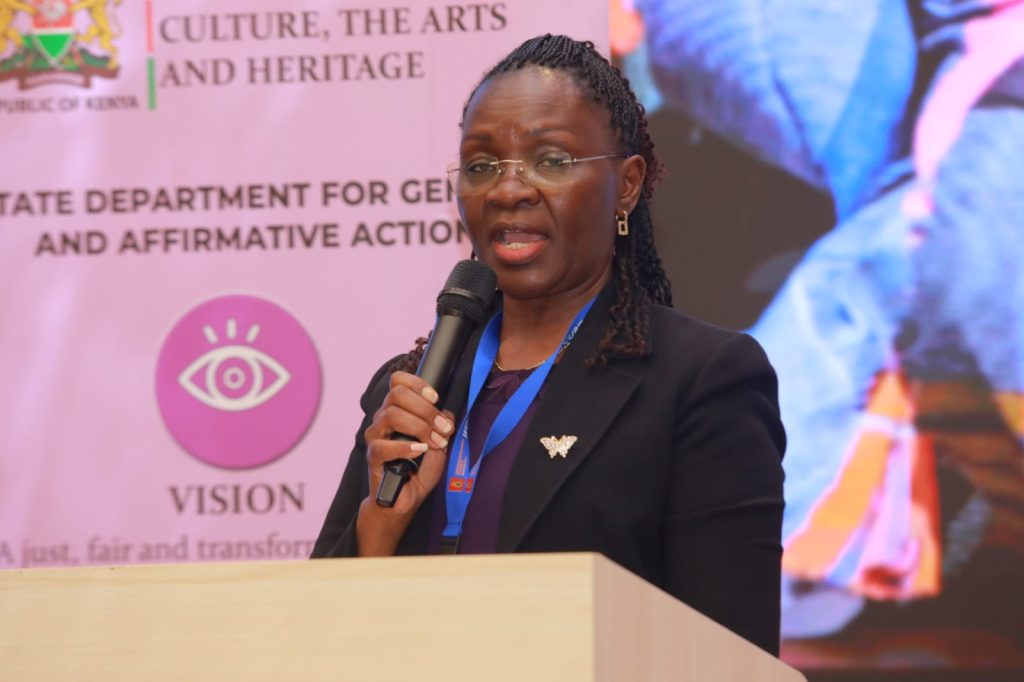
Speaking during the launch, Dr. Josephine Obonyo, Secretary Gender at the State Department for Gender and Affirmative in the Ministry of Gender, Culture, the Arts and Heritage.noted that strengthening women’s participation is essential to achieving lasting peace.
” The most concerning for us is the women participation in the peace and security committees in particular and for us there is mitigation for that. And this is through the implementation of the two thirds gender principle that cuts across and therefore we are working with other stakeholders to ensure that is achieved that is achieved, because once that is achieved then it’s able to cut across in all aspects of leadership, including in Women Peace and Security.”
Speaking on sustainability, the Secretary noted that the government has resources set aside through the Exchequer to ensure that it continues.
” This particular program may have been supported by a development partner, but what I can assure you is that issues around women, peace and security is something that as government we’ve been doing for a very long time and we continue doing. And therefore, in terms of sustainability, funds are set aside. There’s a whole directorate, a specific directorate, that works around issues of women peace and security, and therefore as government this only comes in to complement what we’re already doing.”
Throughout the discussions, participants highlighted the increasingly complex intersection between climate change, conflict, displacement, and gender inequality. Communities in ASAL regions continue to experience recurring droughts, competition over natural resources, and insecurity, all of which disproportionately affect women and girls while also reinforcing the importance of women’s leadership in community resilience and peacebuilding.
The programme is strategically aligned with key national, regional, and global commitments, including the United Nations Security Council Resolution 1325 and subsequent Women, Peace and Security resolutions, Kenya’s National Action Plan on Women, Peace and Security (KNAP III), Denmark’s National Action Plan on Women, Peace and Security (2025–2029), the African Union Continental Results Framework on Women, Peace and Security, and the Sustainable Development Goals—particularly SDGs 5 (Gender Equality), 13 (Climate Action), 16 (Peace, Justice and Strong Institutions), and 17 (Partnerships for the Goals).
Over the next three years, the programme will support stronger policy frameworks, promote women’s meaningful leadership in peace and security governance, strengthen institutional accountability, and foster partnerships that contribute to peaceful, inclusive, and resilient communities across Kenya’s ASALs and informal settlements.
Head of Cooperation, Embassy of Denmark in Kenya Henrik Larsen, reaffirmed Denmark’s commitment to supporting gender-responsive peacebuilding initiatives.
” One of the main issues is, of course, to have a political commitment, to have this as a priority in your general, you know, in your general politics. And I think this is something that Denmark has had for a long time. It’s gender issues is something that we have been prioritizing for many, many years, and therefore the Women Peace and Security agenda has been a natural priority for us. Then, of course, also to have the institutions that can actually work on this, and also be able to do whole-of-government approaches to the implementation. But I think, you know, as with so many other things, it all starts with a political commitment. And I think that has really has been the thing that has been there, from the formulation of policies until implementation.”
He added that the role of the stakeholders should be—of course should be complementary—but they also each have their own role.
” I think it’s the role of the state to ensure that there is protection of the population and that there are the policies and the laws in place. Then, of course, we have the civil society—that really builds bridges from governments and builds trust between governments and the population, but also between the security agencies and the population. I think this is incredibly important. And then they are the ones that we also really want to see build up and empower the women of the local communities.”
As Kenya continues to navigate evolving peace and security challenges, the programme represents a renewed commitment to ensuring that women are at the centre of building peaceful, resilient, and inclusive communities. By strengthening partnerships and translating policy commitments into action, the initiative seeks to create lasting impact for women, communities, and future generations.