Every Kenyan wants access to food that is affordable, nutritious and safe. The country wants to feed the growing population. Increasingly, food-secure nations globally recognize that long-term food security depends not only on production, but also on food safety, healthy ecosystems, and resilient agricultural systems. As pesticide use continues to rise, concerns about the safety and sustainability of our food systems can no longer be ignored.
The proportion of Kenyans experiencing severe food insecurity in fact increased from 15% in 2016 to 28% in 2023, as highlighted in a CEJAD-Kenya policy brief on scaling up agroecology. Food Insecurity still persists, raising an important question: If increasing chemical inputs is not delivering food security, at what cost are we maintaining this model?

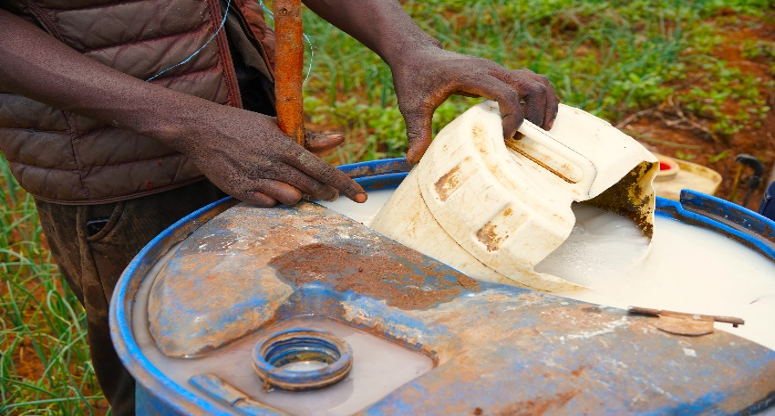
For decades, pesticides have been promoted as a necessary tool for protecting crops and increasing agricultural productivity. Many of these chemicals, however, are highly toxic. Farmers and farm workers are routinely exposed to acute poisoning, respiratory illnesses, skin disorders, neurological effects and long-term health risks, including cancer and reproductive complications. Repeated exposure, often without adequate protective equipment or training, compounds these dangers.
The threat does not end at the farm. Pesticide residues can remain on fruits and vegetables even after washing and cooking. While these measures may reduce residue levels, they cannot always eliminate them completely. This means that exposure extends beyond those applying the chemicals, to the communities consuming the food.
The environmental consequences are equally alarming. Picture a farmer walking through a healthy-looking field after spraying loads of pesticides. The pests appear controlled and the crops thriving. Yet beneath the surface, beneficial organisms that maintain soil fertility are being disrupted. Pollinators are declining, while pesticide runoff contaminates rivers, streams and water sources used by surrounding communities. We have seen farmers in parts of Ukambani reporting declining bee populations.
The damage often unfolds slowly. As soil health deteriorates, farmers become trapped in a cycle of increasing chemical dependence. Declining soil fertility can reduce productivity, encouraging greater pesticide use to maintain yields. Pests may also develop resistance, requiring stronger or more frequent applications. The farmers have to dig deeper into their pockets. What begins as a solution gradually becomes a costly dependency.
This is not just an environmental issue. It is a public health, food safety and economic issue that threatens the resilience of Kenya’s food systems.
Healthy soils store water, retain nutrients and support crops during periods of drought and climate stress. Pollinators contribute to the production of many fruits and vegetables, while natural predators help control pests without chemical interventions. When pesticides undermine these natural systems, agricultural resilience suffers.
Agroecological practices have demonstrated the potential to maintain productive yields. Practices such as crop diversification, intercropping, composting and protecting beneficial insects can help farmers maintain productive farms while reducing reliance on hazardous chemicals. By strengthening the ecological foundations of agriculture, these approaches support long-term food security. Agroecology is not merely an alternative farming approach; it is an investment in public health, environmental sustainability and resilient food systems.
This transition is particularly important for smallholder farmers, who produce a significant share of the food consumed across developing countries. Yet many remain dependent on pesticides due to factors like limited access to information on the viable alternatives and the perception that pesticide use is the only effective way to manage pests and safeguard yields. Governments, civil society organizations, researchers and development partners must therefore work together to support farmers in adopting safer and sustainable agricultural systems.
The responsibility, however, does not rest with farmers and policy makers alone. All of us have a role to play in shaping the food system we want. By supporting sustainably produced food and valuing farming practices that protect people and nature, consumers can help drive demand for safer alternatives. Many of the solutions are neither new nor expensive. From planting pest-repelling crops and enriching soils with organic compost to using natural pest-control preparations made from locally available materials such as chilli, garlic and neem, communities already possess knowledge that can reduce reliance on hazardous pesticides. The challenge is not a lack of alternatives, but ensuring that these solutions are supported, shared and scaled.
Across East Africa, there is growing recognition that the future of agriculture cannot be secured through continuously increasing dependence on pesticides. Recently, there has been the launch of an agroecology initiative to be implemented through collaboration between regional and international partners, under the Global Framework on Chemicals (GFC). The aim is to support more than 3,000 farmers in Kenya, Tanzania and Ethiopia to transition towards safer and more sustainable farming systems. In Kenya, the Centre for Environment Justice and Development (CEJAD) will lead implementation efforts, by utilizing methods like demonstration farms, and farmer trainings.
As we work towards achieving food security, the focus should not only be on producing more food but on producing food that is safe. A food system dependent on toxic pesticides puts farmers, farm workers, consumers and ecosystems at risk while failing to address the root causes of hunger and malnutrition. Kenya has an opportunity to lead by eliminating the Highly Hazardous Pesticides and supporting farming systems that nourish people without harming them. Food security begins on the farm.
The writer is a Communications and Outreach officer at the Centre for Environment Justice and Development (CEJAD)