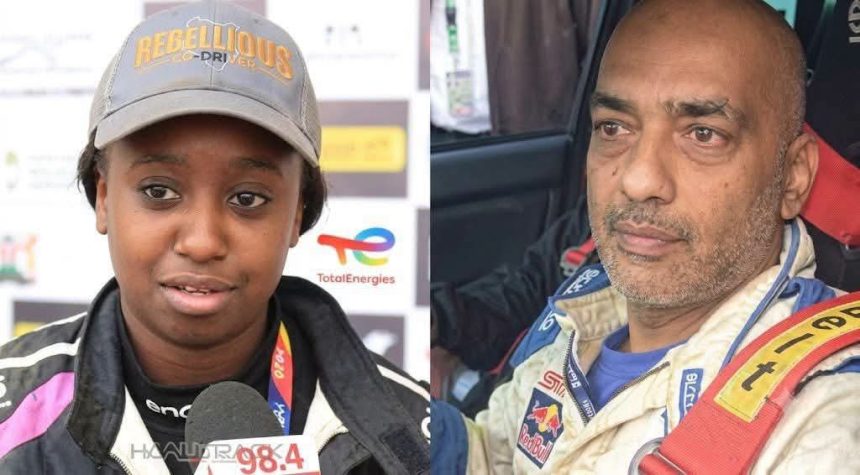
Rally driver Maxine Wahome walked out of Nairobi’s Milimani Law Courts a free woman on Tuesday, after the High Court threw out murder charges linked to the death of her former boyfriend and fellow motorsport enthusiast, Asad Khan, closing a legal chapter that had shadowed her career for more than two years.
Fresh details emerging from Tuesday’s ruling show just how thin the evidentiary thread was that had kept rally driver Maxine Wahome tied to a murder charge for more than two years, with the High Court ultimately concluding that the prosecution’s entire case rested on circumstance rather than proof.

Justice Lilian Mutende noted that the state built its case largely around the fact that Wahome and her boyfriend, Asad Khan, were the only two people in the house when the fatal altercation took place, but the judge held that this alone could not exclude other possible explanations for how Khan sustained his injuries.
Despite calling 29 witnesses to the stand, prosecutors were unable to produce anyone who could describe exactly how Khan was hurt; those who arrived at the scene said they heard shouting and Khan telling Wahome to leave, but no one saw the injury occur.
The physical evidence further undercut the state’s position. A crime scene officer testified that blood was found on the staircase and on shattered glass from a door, the only item at the scene consistent with causing the wounds, while other objects recovered, including a penknife and a piece of metal, showed no trace of blood. Investigators also reported no signs of disturbance in the bedroom.
Wahome’s own account, that she had locked herself on the balcony after Khan tried to attack her and that he broke the glass attempting to reach her, went largely unchallenged; the investigating officer conceded under cross-examination that there was no definitive evidence tying her to his injuries.
Medical testimony added another layer of doubt, with a doctor suggesting some of the injuries could have come from a fall down the stairs, and the defence raising questions about whether treatment complications played a role in Khan’s death.
The court also weighed messages exchanged between the pair before the incident, along with testimony describing tension in the relationship, but ruled that Wahome’s absence from Khan’s hospital bedside and funeral could not, by itself, prove wrongdoing.
Her lawyer, Steve Kimathi, said the case should never have reached court and signalled the defence team may now pursue legal action over how Wahome was arrested and publicly presented as a suspect.