Kenyans earning Ksh 32,333 and below will be exempted from Pay As You Earn deduction as part of measures to enhance household income.
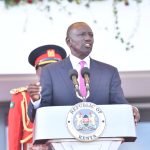
This is among four new measures announced by President William Ruto as the country marked Mashujaa Day hosted in Eldoret City.

In the current Income Tax Act, Kenyans who fall within the tax band are charged PAYE at the rate of 25% while those earning up to Ksh 24,000 are taxed at the rate of 10%.
“For workers on modest incomes, every shilling saved means more money to meet their families’ needs, including food, transport, and other essentials. These proposals will be presented to Parliament beginning next week,” said President Ruto.
Ruto has further directed the National Treasury to develop proposals to exempt land transactions valued at Ksh 1 million or less from stamp duty and to introduce progressive rates for higher-value transactions.
“These measures will help reduce the cost of acquiring and transferring land, strengthen security of land ownership and make property ownership more accessible to ordinary Kenyans,” he stated
Transfer of parcels of land in urban areas currently attract a stamp duty charge of 4% of the value of land while land in rural areas attract a stamp duty at the rate of 2%.
In a bid to spur growth of the digital economy, President Ruto proposed the removal of 25% import duty on imported mobile phones.
The tax rate was introduced by Treasury in the 2026/25 financial year
“A mobile phone is no longer a luxury. It is a classroom, a marketplace, a bank, an office and, for many young Kenyans, a gateway to employment. Making phones more affordable will bring the opportunities of the digital economy within reach of more citizens,” Ruto noted.
Beginning January 1, next year, the government will also absorb 50,000 youth under the national internship programme.
The interns will also be entitled to a monthly stipend.
Placements will be made through a transparent, digital and merit-based system, alongside incentives to encourage private employers to provide meaningful work experience.
“Too many young people cannot secure employment without experience, yet cannot gain experience without employment. This programme is intended to break that cycle by providing a pathway from education to practical and productive workplace experience and, ultimately, meaningful employment,” he stated.
President Ruto further backed the measures to address the burden of taxation on modest incomes, the cost of acquiring property, the expense of accessing digital opportunities and the difficulty of entering the labour market.
President Ruto added,“Our purpose is clear: to put more money in the pockets of workers, make ownership easier for families, bring digital opportunity within reach, and open the doors of employment to our young people. That is what it means to translate Usawa from a principle into practical action.”