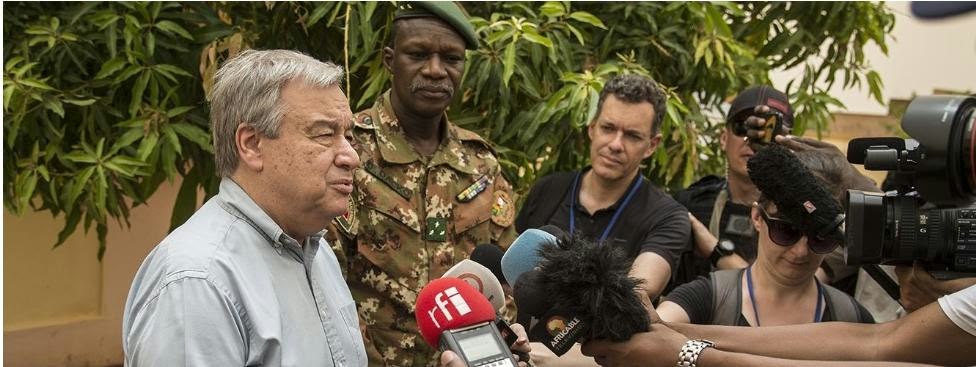
The United Nations Secretary-General Antonio Guterres has called for an end to impunity for crimes against journalists, warning that attacks on media workers undermine human rights, democracy and the rule of law.
In a statement Monday, when marking the International Day to End Impunity for Crimes against Journalists, Guterres said at least 34 journalists had been killed over the past year, with six out of every seven killings going unpunished.

“Over the past year, at least 34 journalists paid the ultimate price. Six of every seven such killings go unpunished,” he said.
He noted that across the world, journalists continue to pay an outrageous price for telling the truth, adding that in conflict settings, the rate of impunity is close to 100 per cent. “This is a heinous affront to the victims and their loved ones, as well as all of us who depend on journalists to remain informed and engaged. This scandal must end,” Guterres said.
“On this International Day to End Impunity for Crimes against Journalists, we demand justice. When journalists are targeted and their reporting is extinguished, it makes victims of us all,” said UN SG.
Guterres underscored the essential role media workers play in keeping the public informed and holding those in power accountable but decried the injustices they undergo. “Journalists are often harassed, surveilled, sued, physically attacked or imprisoned and sometimes even tortured or killed simply for doing their jobs.”
He noted that progress has been made since the UN Plan of Action on the Safety of Journalists and the Issue of Impunity was launched in 2012, adding that impunity rate has gone down while calling for more action.
“We know progress is possible. Since the UN Plan of Action on Safety of Journalists and the Issue of Impunity was launched in 2012, the impunity rate for these crimes in countries not experiencing armed conflict has come down from 94 per cent to 77 per cent. But we must do more,” Guterres said.
Adding that: “Nothing should impede journalists’ ability to do their work, which is fundamental to human rights, democracy and the rule of law. That includes investigating every case, prosecuting every perpetrator and putting a stop to online attacks.