Kenya Airways (KQ) is intensifying investments in operational efficiency, digital transformation and cargo expansion as the national carrier positions itself for long-term profitability amid persistent global aviation challenges.
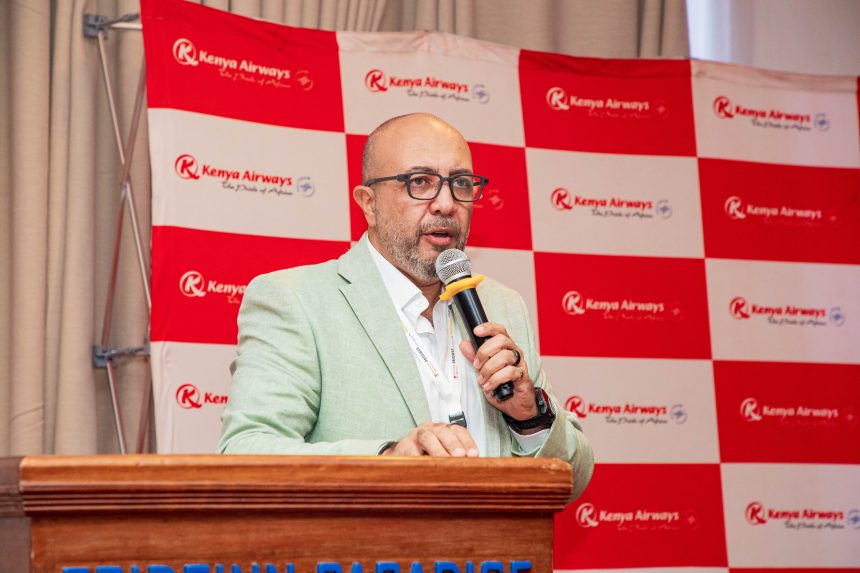
Speaking during the Kenya Airways Aviation Media Lab, Kenya Airways Acting Managing Director and Chief Executive Officer Captain George Kamal said resilience has become critical for airlines navigating disruptions across the global aviation sector.

“The aviation industry globally continues to face supply chain disruptions, aircraft shortages, rising operational costs, currency pressure, geopolitical instability and insurance issues,” he said.
Kamal said the airline is focusing on improving operational recovery, customer experience and network efficiency as part of efforts to strengthen performance and reliability.
He noted that safety, operational discipline and financial stability remain central to the airline’s strategy as Kenya Airways seeks to maintain its role as the country’s national carrier.
“Safety comes number one, operational discipline, customer confidence, financial stability and above all maintaining our responsibility as Kenya’s national carrier and strategic lifeline to our people,” Kamal said.
Nairobi as Africa’s aviation gateway
The CEO described Nairobi as one of Africa’s key aviation gateways, revealing that Jomo Kenyatta International Airport (JKIA) handled about 8.6 million passengers in 2025 while Kenya Airways currently connects 42 routes across 44 countries.
According to Kamal, the airline’s connectivity continues to support trade, logistics firms, exporters and thousands of Kenyan farmers who rely on air transport to access international markets.
He noted cargo business remains a major pillar in the airline’s growth strategy with target to increase its freight market share by the end of the year.
“We have 11 per cent market share which equates to about 70 tonnes. We are aiming to have 250 tonnes by the end of the year, translating to over 40 per cent market share,” he said.
On the future of African aviation, Kamal said the continent is entering a defining growth phase, with passenger traffic expected to double by 2040.
He called for implementation of initiatives such as the Single African Air Transport Market (SAATM), lower taxes and open borders to improve connectivity across the continent.
“Africa cannot develop if Africans cannot efficiently connect with each other,” he said.
The airline is also pursuing sustainability initiatives through partnerships aimed at establishing Africa’s first dedicated sustainable aviation fuel facility in Kenya using recycled materials such as used oils and animal fats.
Once operational, Kamal disclosed the facility is expected to produce 42 metric tonnes of sustainable aviation fuel.