Leaders from Kenya’s Western region, allied with President William Ruto, have intensified their campaigns to position one of their own to succeed the head of state upon his retirement.
Led by National Assembly Speaker Moses Wetang’ula, the leaders emphasised that their numerical strength was advantageous to their strategic bid for President Ruto’s re-election.

Amid the alignments and realignments anticipated to shape the 2027 contest, the leaders urged the Luhya community to support Ruto’s re-election, with the hope that he would reciprocate by backing a candidate from their region for the presidency.
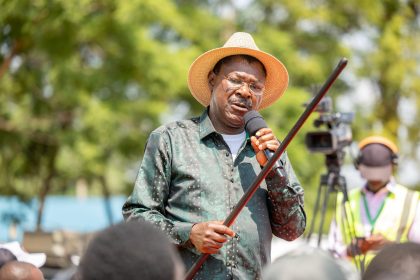
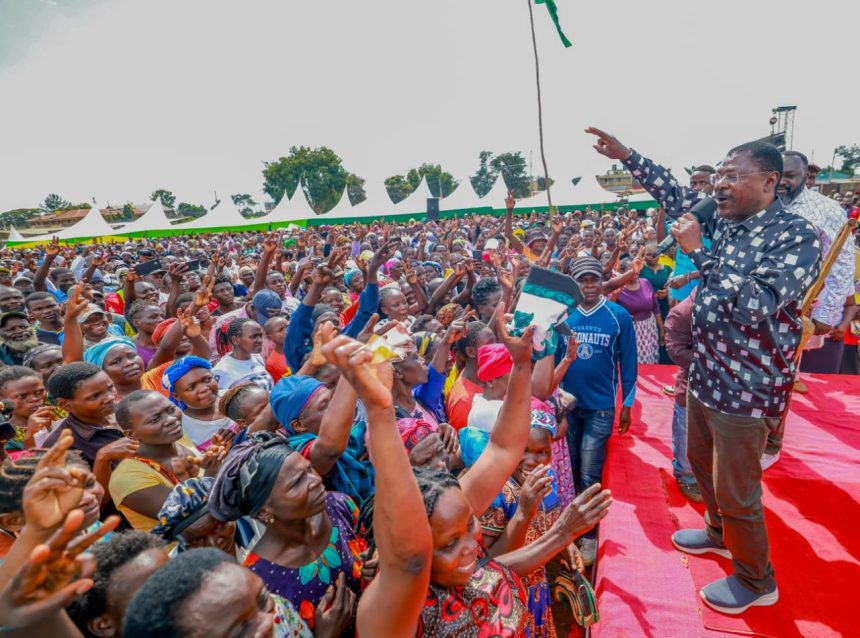
Campaigning for the President’s re-election at a women’s empowerment event in Khwisero, Kakamega County, Wetang’ula called on the community to vote for President Ruto in the next general election. He then stated that by 2032, the region must rise to the occasion and seek the presidency.
“We supported Raila when he eyed the presidency, we supported Kibaki, others supported Kenyatta. In this last election, we supported President Ruto. Now it is our turn to use these alliances to rise to the presidency,” stated the Speaker.
The Speaker cautioned the people of Western Kenya against being drawn into the self-serving politics advanced by some of its leaders eyeing political power. He stressed the importance of regional unity to increase their bargaining power in future contests.
“We have always supported other leaders from other regions; we also deserve a chance, but we must be united as a community. We will become attractive to others if we unite and have the numbers” he added.
Farouk Kibet, an aide to the President, echoed these sentiments, noting that Wetang’ula was the community’s preferred candidate to take over from President Ruto.
“Those saying it is not time for Western are dreaming. Come 2032, a leader from Western Kenya will be President, and that person is Speaker Wetang’ula,” he affirmed.
Bungoma Governor Kenneth Lusaka stated that the community was looking to Wetang’ula to spearhead their presidential bid and called on leaders and residents to rally behind him to build a formidable force for the country’s top seat.
“The Luhya community stands a better chance of ascending to power by supporting President Ruto because he will be doing his last five years…if we rally behind another leader, we will have to wait for 10 years,” said Lusaka.
He added: “The senior most politician we have to from for presidency is Speaker Wetang’ula”.
Khwisero legislator Christopher Aseka supported the push to elevate Speaker Wetang’ula from the third-in-command position to the presidency.
He noted that the Deputy President slot was being eyed by many, including current Deputy President Prof. Kithure Kindiki and ODM chairperson Gladys Wanga, suggesting that a leader from the Luhya community was better placed to occupy the position due to their numbers.
“We will support President Ruto’s re-election bid, then we will ask him to return the favour in 2032,” chimed his Ikolomani counterpart Bernard Shinali.
Speaker Wetang’ula dismissed the assertion that the Western region had been misled into believing they were a formidable part of the government. He argued that, since independence, only the Kenya Kwanza government had appointed Mulembe professionals to various key government positions.
“In retired President Uhuru Kenyatta’s government, we had one Cabinet Minister, but this time we have several of our people in Cabinet, as Principal Secretaries, and I as the Speaker, among others. However, to make ourselves more attractive and build alliances, we must unite,” the Speaker added.
The Kenya Kwanza administration was lauded for initiating widespread development across the country and promoting equity in development. The Speaker detailed the dualling of the Rironi-Mau Summit road and its impact on decongesting the busy highway, facilitating faster movement of goods, people, and services.
He also celebrated the planned extension of the Standard Gauge Railway from Naivasha to Kisumu and further into Western Kenya, stating that this would also spur growth and development.
Wetang’ula commended farmers who had embraced the government’s reduction in the cost of farm inputs, particularly fertiliser, whose price had dropped from Ksh. 7500 to Ksh. 2500. Wetang’ula stated that the country’s food basket had been sufficiently replenished.