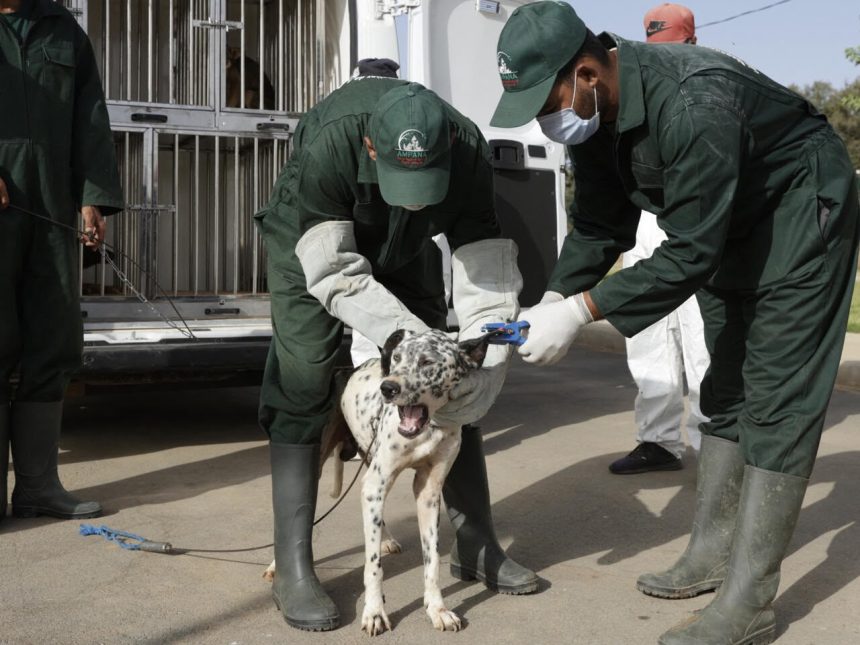
Promulgated on August 10 and entering into force on Friday, August 14, the new Moroccan legislation on stray animals comes in a context marked by preparations for the 2030 World Cup and international criticism regarding the treatment of dogs in the kingdom.
Morocco now has a new legal framework for the protection and management of stray animals. Law No. 19.25, promulgated on August 10, entered into force on Friday, August 14, following its publication in the Official Gazette, placing the management of stray dogs and cats under a national system combining animal protection and health risk prevention.

The text, previously adopted by both houses of Parliament, received 74 votes in favor and 21 abstentions in the House of Representatives, with no votes against.
Presented by the Minister Delegate in charge of Relations with Parliament and Government Spokesperson, Mustapha Baitas, on behalf of Agriculture Minister Ahmed Bouari, the executive branch states it aims to replace local and ad hoc interventions with a unified legal and institutional framework.
The law notably governs the creation and management of reception and care centers, while providing for an animal registration system and a national database.
The entry into force of this legislation takes on special significance less than four years before the 2030 FIFA World Cup, which Morocco will co-organize with Spain and Portugal.
The treatment of stray animals has become a sensitive subject in recent months surrounding Morocco’s preparations for the World Cup.
Foreign media and animal welfare organizations have accused authorities of resorting to culling campaigns to reduce their presence in public spaces ahead of the competition.
These widely publicized accusations abroad have put Rabat under pressure. Moroccan authorities, for their part, defend an approach based on animal protection, sterilization, and care.
The mechanism thus enshrines the principle of animal welfare while maintaining a public health component.
It aims in particular to prevent diseases transmissible by stray animals and to better identify the responsibilities of various authorities.
The conditions for creating and operating reception facilities as well as the powers of officers responsible for noting infractions are also regulated.
The new law therefore also constitutes a regulatory response to a controversy that now extends beyond Morocco’s borders.
As the 2030 World Cup approaches, its main test, however, will be its concrete implementation: sterilization capacities, funding and the multiplication of reception centers, the involvement of local authorities, and the effective abandonment of elimination methods denounced by associations.
For Rabat, the issue goes beyond the mere management of stray animals.
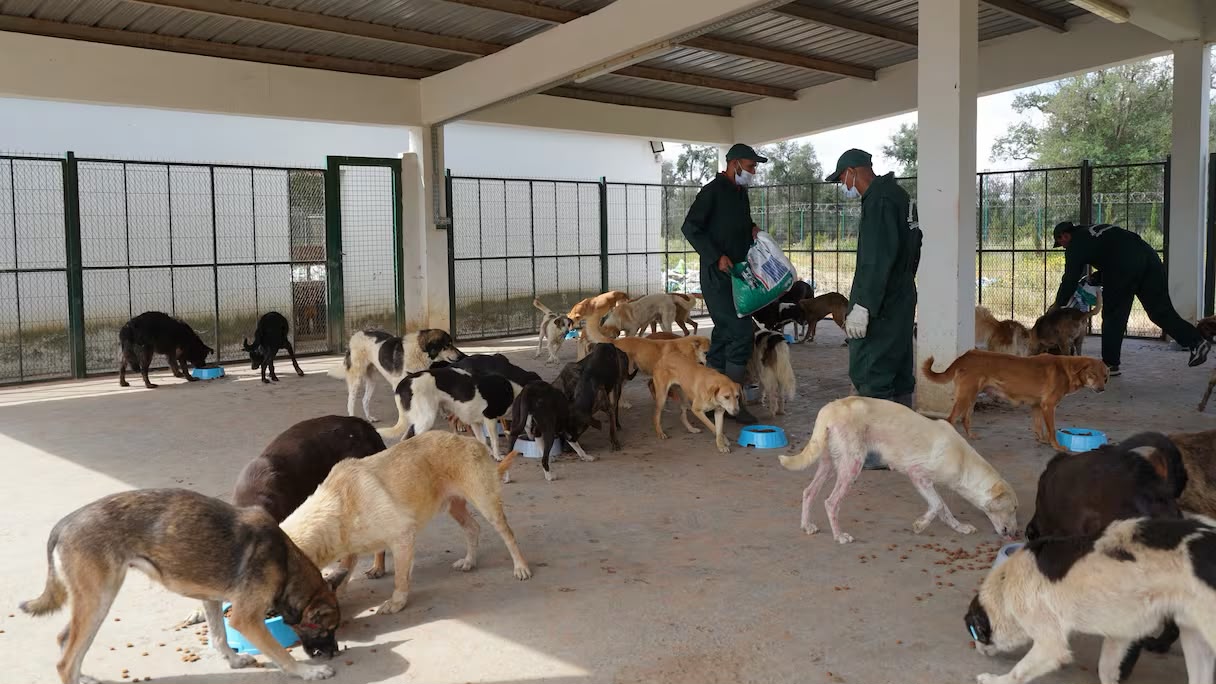
Four years away from an event that will heavily expose the country to international scrutiny, the way Morocco applies this legislation is also expected to weigh on its image and its ability to meet the animal protection standards claimed by international organizations.
In 2030, Morocco will co-host the FIFA World Cup with Spain and Portugal, becoming the second African country to do so, following South Africa’s event twenty years earlier.
This partnership with its Mediterranean neighbors underscores Morocco’s increasing involvement in global sports.