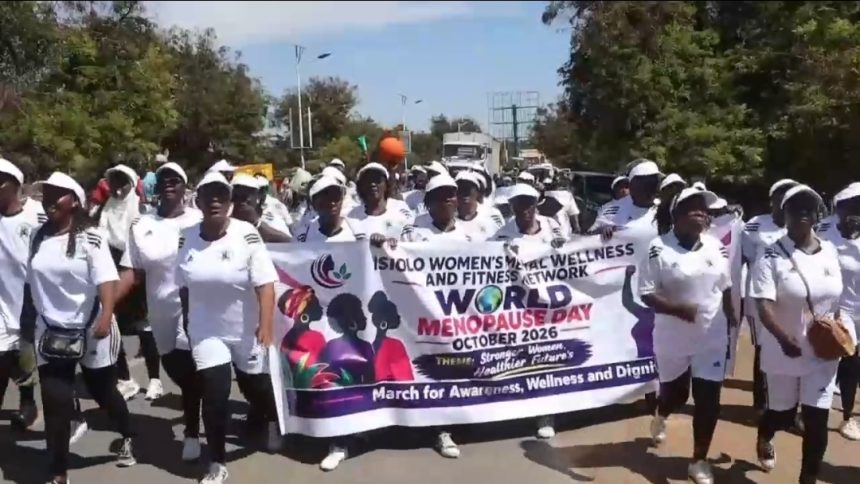
A group of women in Isiolo aged 40 years and above have embraced a mental wellness and physical fitness initiative aimed at helping them cope with the natural challenges that come with menopause.
Through the establishment of Isiolo Women Mental Health and Fitness Network a year ago, the women meet for an hour every Monday evening and do physical workouts together, in a bid to keep their bodies fit, and also share with each other the various challenges that they encounter either at work or at their respective homes, a move that helps them cope with or find solutions to the challenges that they face.

While celebrating the World Menopause Day, the women staged a walk from the County Commissioner’s office grounds, through the streets of Isiolo town all the way to the Isiolo Catholic Cathedral grounds where they held they usual physical fitness sessions, and received advice from a mental health specialist on how to better take care of each other.
According to the group chairlady Racheal Njogu, the initiative has gone a long way towards helping the women to remain healthy and build stronger relationships with their immediate family members, ensuring better families in the process.
Racheal noted that the walk was aimed at creating awareness among other women in Isiolo town and its environs, so that they join the movement for a healthier society.
According to the women, menopause stage pauses a myriad of challenges that if not well addressed, result to break-ups in marriage and unnecessary conflicts with other community members.
They recounted the struggles that they go through, and how the mental wellness and physical fitness initiative has helped them cope with the challenges, and made an appeal to all women to adopt and embrace the culture of regular physical exercises and opening up to each other/sharing their challenges to ensure that they lead healthier lives and even increase their lifespan.
They highlighted the need to improve understanding of the natural challenges that women may experience during the menopausal transition, arguing that some women face difficulties when relating to work mates at their various work stations and at home when relating to their spouses and children.
This leads to less productivity at work, and conflicts at home, which they argue can be avoided when the society understands better what they go through during the menopause period.
Menopause is a natural biological process that marks the end of a woman’s menstrual cycles and reproductive years. It commonly occurs between the ages of 45 and 55, although some women experience it earlier or later.
The transition is often accompanied by symptoms such as hot flashes, night sweats, sleep disturbances, mood changes, vaginal dryness, joint pain and muscle discomfort. The severity and duration of these symptoms vary from one woman to another.
Despite its impact on women’s wellbeing, menopause remains a subject that is rarely discussed openly in some families and communities, with stigma and misinformation potentially preventing women from seeking medical advice.
The women insisted that there was need to openly speak about Menopause, contrary to believes among many community members that it is shameful to openly discuss the topic.
Racheal argued that greater awareness is therefore essential in helping women understand the changes taking place in their bodies, recognize symptoms that may require medical attention and access appropriate care.
Healthcare providers can help women manage menopausal symptoms through individualized treatment and lifestyle guidance, including physical activity, healthy eating, adequate sleep and, where appropriate, medical interventions.
Experts also emphasise the importance of distinguishing menopause-related symptoms from other medical conditions, particularly when women experience persistent pain or unusual changes in their health.
Samuel Sirengo, a mental health specialist at the Isiolo County Referral Hospital reiterated the importance of regular physical exercises especially for persons aged 40 years and above to improve bone marrow density and have stronger, healthier bodies.
He however warned women against strenuous exercises that may cause injuries such as weightlifting, and instead recommended simple exercises such as regular walks around their neighborhood or jogging.
Family members, employers and community leaders also have a role to play in creating supportive environments where women can discuss their experiences without embarrassment or discrimination.
World Menopause Day provides an opportunity to challenge misconceptions about ageing and menopause, while encouraging open conversations about women’s health and the need for accessible, evidence-based healthcare.
As awareness campaigns continue around the world, the message remains clear: menopause is a natural stage of life, and women experiencing it deserve understanding, dignity and appropriate support.