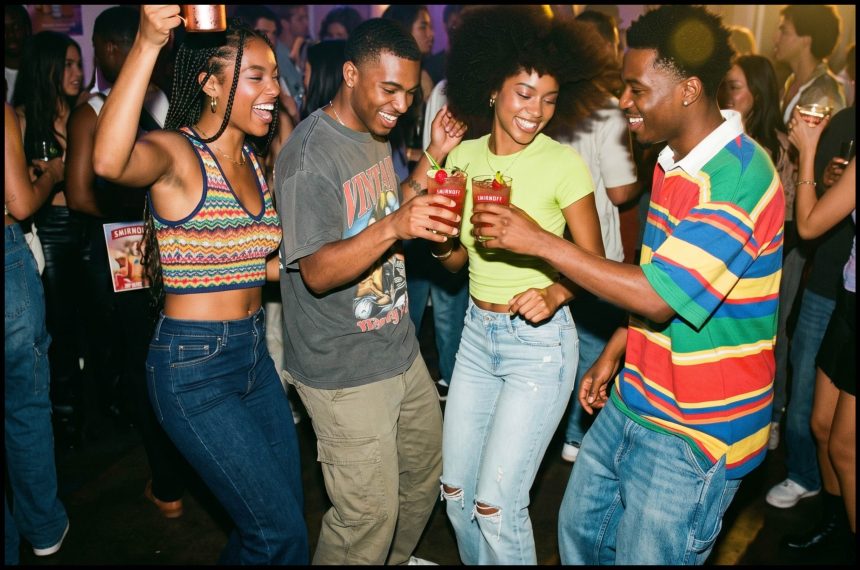
Something interesting is happening on Nairobi’s dance floors. Somewhere between the latest Arbantone releases, familiar Genge beats, and early-2000s dancehall anthems, a generation is rediscovering the music that shaped an earlier era.
And it is not just millennials revisiting old favourites. Younger audiences, many of whom were too young to experience the original Y2K era, are finding their own connection to its sounds, style and culture.

The return of the 2000s is part of a wider cultural revival. From fashion and photography to music and nightlife, the Y2K aesthetic has found a new audience, fuelled in part by social media and a growing appetite for nostalgia.
But beyond low-rise jeans, oversized tracksuits, baby tees and vintage accessories, something more interesting is happening: a renewed appreciation for the cultural expressions that defined the period.
In Nairobi, this revival has taken on a distinctly local character. The city’s thrift culture, particularly around markets such as Gikomba and Toi, has become part of the appeal, with young fashion enthusiasts finding and reworking pre-loved pieces into contemporary looks.
It gives the trend a local identity while making personal style less dependent on constantly buying into the latest fashion cycle.
Yet, if fashion provides the visual language of the Y2K revival, music is arguably its most compelling expression.
For those who came of age in the early 2000s, the era carries particular musical memories.
Genge, Kapuka and dancehall were more than genres and radio hits; they were soundtracks that shaped moments in Kenyan pop culture.
The music travelled through matatus, neighbourhood entertainment spots, school gatherings and dance floors, creating shared experiences that remain recognisable years later.
Today, those sounds are finding their way back into contemporary nightlife. DJs are revisiting familiar records, audiences are responding to throwback sets, and younger artists are drawing inspiration from the musical foundations laid by an earlier generation.
Perhaps the clearest example of this relationship between old and new is Arbantone.
With its characteristic sampling of older Kenyan and Jamaican sounds, combined with contemporary production, Sheng lyricism and a distinctly urban sensibility, the genre illustrates how musical heritage can be reinterpreted rather than simply preserved.
What once filled dance floors in a past era can now find a new audience through a different beat, a new artist or a viral dance challenge.
This is not necessarily a return to the past. It is a conversation between generations, with each adding something of its own to the music.
It also speaks to a changing appreciation of nightlife. While new genres and sounds continue to shape the entertainment scene, there is an enduring appeal that people recognise, sing along to and share with others.
The experience is not always about discovering the next big sound; sometimes it’s about hearing an old favourite in a new setting, or watching an entire room come together over a song everyone seems to know.
This is the cultural space Smirnoff Sound Nation celebrates. Conceived as a showcase of Kenya’s evolving music culture, Sound Nation brings together different generations of DJs, MCs and musical influences, creating room for established sounds and emerging genres to share the same stage.
Its debut in Eldoret brought together a diverse mix, from Gengetone and Arbantone to hip-hop, Amapiano, Afrohouse, RnB and Oontz. Rather than confining the experience to one particular genre or generation, the platform recognises the breadth of influences that form Kenya’s contemporary music identity.
It also reflects Smirnoff’s iconicity as the world’s most recognised premium vodka that keeps evolving while bringing the assured taste and craftsmanship since 1856.
Perhaps that is what makes the Y2K revival particularly interesting. It is not simply about dressing like the past or playing old records for nostalgia but recognising the cultural value of craftsmanship while giving a new generation space to innovate.
Music will continue to change. New artists will emerge, genres will evolve, and the dance floor will always make room for the next sound. But some things remain remarkably consistent: the anticipation of a familiar opening beat, the collective response when a favourite song comes on, and the simple pleasure of sharing a good musical moment.
Trends may come and go, but good music rarely needs an introduction. And sometimes, it does not need reinventing either. After all, why change a good thing?