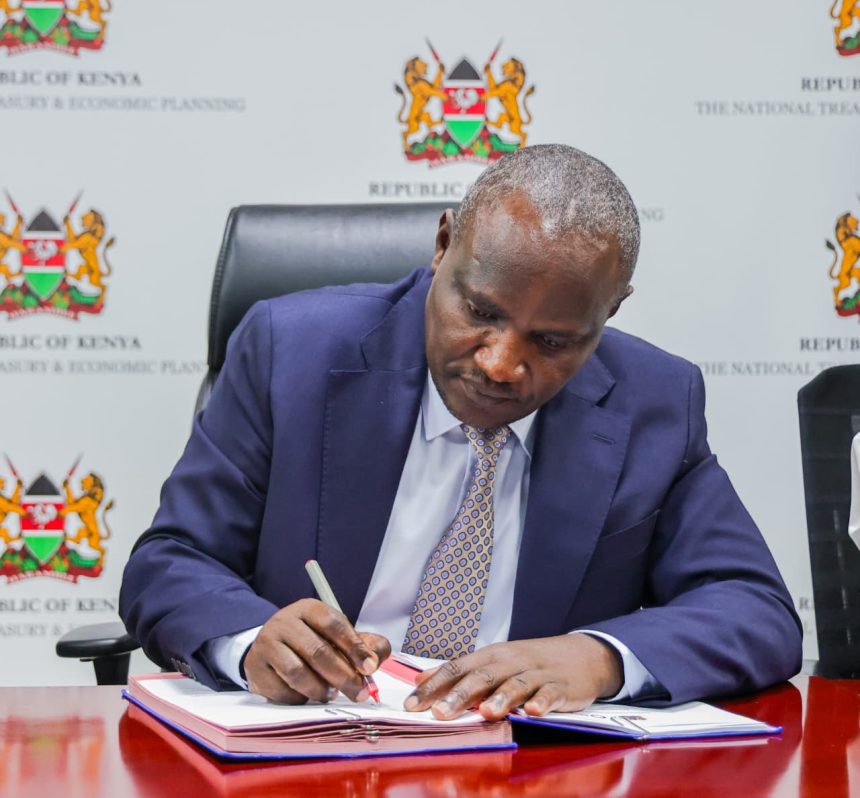
The National Treasury and Economic Planning Cabinet Secretary John Mbadi is expected to present tax measures for raising revenue to fund the country’s proposed expenditure of Ksh 4.8 trillion for the next financial year beginning July 1, 2026 later on Thursday.
This year’s budget comes amid rising external threats which have seen inflation rise to 6.7pc on account of rising fuel prices which have put pressure on household spending.

In the 2026/27 financial year, the government plans to allocate Ksh 1.5 trillion to Consolidated Fund Services (CFS) which has risen by 9.9pc from Ksh 1,37 trillion due to rising debt repayments.
“The sector that is taking our money is interest on debt which has grown from Ksh 1 trillion to Ksh 1.5 trillion,” said Samuel Atandi, Budget and Appropriations Committee Chairperson when he spoke to KBC Channel1.
In the proposed expenditure, recurrent expenditure will rise to Ksh 2.05 trillion while capital expenditure will reduce by 3.9pc to Ksh 845.2B.
Out of the total spending of Ksh 4.8 trillion, counties are expected to receive at least Ksh 428 billion as shareable revenue including grants.
“The budget is not huge as people are trying to say. With a Ksh 20 trillion economy like ours, Ksh 4.8 trillion budget is very tiny,” added Atandi.
Speaking at Treasury building early on Thursday, Mbadi admitted to challenges in raising ordinary revenue even as government deploys measures to seal leaks and enhance compliance.
In the FY2026/27 budget, total revenue including grants is projected to rise to Ksh 3.67 trillion, which is a 6pc increase from the current projections.
Ordinary revenue is expected to increase by 7pc from Ksh 2.78 trillion to Ksh 2.99 trillion on account of improved collection from income tax, VAT, import duty and excise duty collections.
“Revenue collection is a big challenge and its informed by a number of factors. One of them is inefficiency at the Kenya Revenue Authority (KRA). That cannot be wished away. But there are also been some challenges in terms of tax administration,” said Mbadi.
Mbadi said Treasury expects revenue to improve in the coming financial year backed by ongoing reforms at the authority.
“We had allocation of for KRA to carryout reforms, about Ksh 17 billion and a lot of reforms are happening at KRA and I’m sure in the coming financial year, KRA will be able to collect more without us raising taxes,” he added.
In the FY2026/27 education is expected to receive the largest share of revenue amounting to Ksh 781.4 billion as the government begins to implement the zero-based budget.