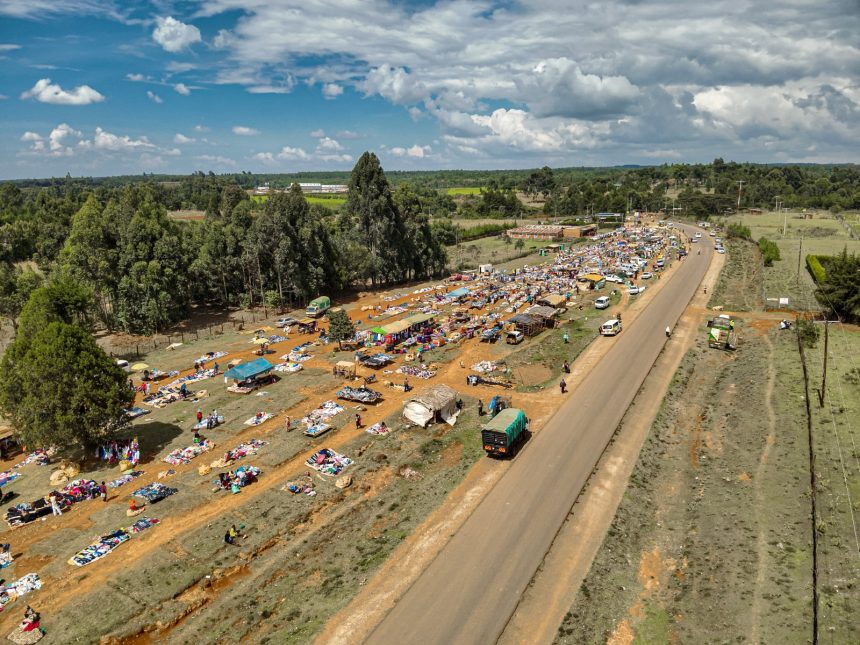
A vital link between Elgeyo Marakwet and Uasin Gishu is improving rural mobility, creating employment and bringing communities closer to markets, services and economic opportunities.
Residents along the Waunifor–Flax corridor have long endured difficult journeys between neighbouring communities in Elgeyo Marakwet and Uasin Gishu due to poor road conditions. Trips that should have been relatively straightforward often involved navigating difficult terrain, vehicles getting stuck and motorists taking longer alternative routes.

The ongoing improvement of the Waunifor–Flax Road is changing this experience, strengthening connections between the two counties and opening up communities that have faced longstanding transport challenges.
The road runs from Waunifor through Flax towards Chepkorio and routes leading to Eldoret, providing an important link between rural settlements and the wider economic and social networks of the North Rift.
Ezron Kipkorir Kipop, a resident of Flax in Elgeyo Marakwet County, near the Uasin Gishu border, says the transformation is already visible.
He recalls that before the road improvements, vehicles frequently became stuck, disrupting the movement of goods and making journeys to neighbouring commercial centres difficult.
“Previously, vehicles would get stuck, and products were delayed in reaching the market. Now goods arrive on time, and the road provides a shortcut to places such as Cheptiret,” he says.
The improved route is also reducing the need for residents to take longer journeys when accessing markets and services across the county border. This is particularly important for communities whose livelihoods depend on regular movement between farms, trading centres and urban markets.
Beyond connectivity, the project is generating employment for local residents. Kipop says more than 100 young people have been recruited to support construction activities, including drainage works, giving them an opportunity to earn an income while contributing to infrastructure development in their own communities.
The use of locally sourced construction materials is also supporting economic activity within the surrounding areas, ensuring that some of the investment circulates within the local economy.
Boda boda operator Reuben Cherop, who lives in Kipkabus and operates around Flax, says improved road conditions have made his work more reliable.
He remembers the Waunifor–Flax section as particularly difficult during rainy weather, when slippery surfaces made motorcycle transportation challenging.
“Before the road was improved, we faced many challenges, especially when it rained. The road was slippery, and movement was difficult. Now transportation is much easier,” he says.
Transport operators stand to benefit from fewer disruptions, easier movement and better access to customers. Residents will also enjoy more reliable connections to markets, healthcare facilities and other essential services.
The road is expected to strengthen the transportation of agricultural produce across the corridor. Communities in the area produce milk, tea, maize, pyrethrum and avocados, among other commodities. Better connectivity will ease the movement of produce from farms to collection points and markets, helping farmers reach buyers more efficiently.
As construction progresses towards bitumen standard, the project is addressing a longstanding infrastructure gap between rural communities in Elgeyo Marakwet and Uasin Gishu counties.
Its significance extends beyond the immediate road corridor. Improved access, local employment opportunities and stronger inter-county connections are helping integrate rural communities into wider economic networks.
To residents who have endured difficult journeys along the route, the improved road represents a practical change in how they work, trade and access essential services. It is also an investment in a more connected rural economy, where poor infrastructure no longer presents such a significant barrier to opportunity.