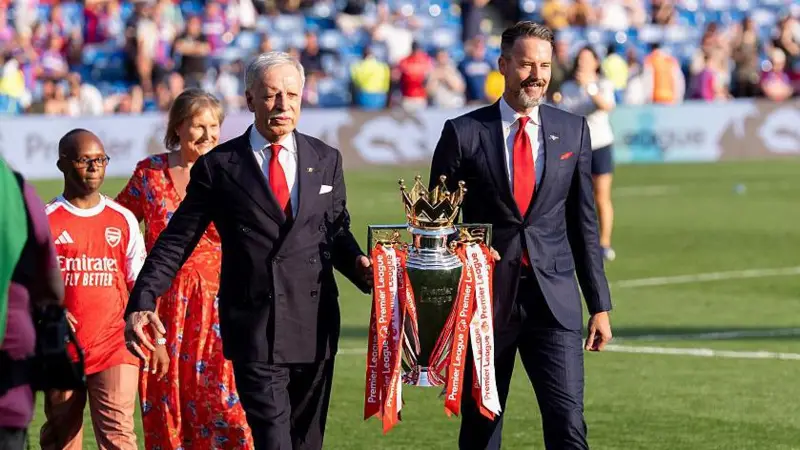
Arsenal co-chair Josh Kroenke says behind-closed-doors football during the Covid-19 pandemic allowed manager Mikel Arteta “space” to help revive the “sleeping giant”.

The Kroenke Sports and Entertainment (KSE) group took full control of Arsenal in 2018 but it has not always been easy, with fan protests at how the club was being run taking place during their tenure.
The Kroenkes hired Arteta in 2019, giving the former Arsenal player his first senior managerial role after a period of uncertainty at the club.
It took time for that vision to take hold with two eighth-placed finishes, despite a 2020 FA Cup win, leading to some questioning whether Arteta was the right man for the job.
But now the Spaniard has transformed the club after six-and-a-half years in charge and has led the Gunners to their first Premier League title in 22 years.
Relationship with Arteta and how they picked him
Giving a manager their first senior job in football is always a risk, but Kroenke says Arteta’s character made it clear that he was the right candidate to succeed Unai Emery in December 2019.
“Anybody that gets a chance to be around Mikel, you can buy into what he’s selling pretty easily,” Kroenke said.
“So I don’t want to give myself or my father [Stan Kroenke, founder and chairman of KSE and co-chair of Arsenal] any credit.
“I think Mikel and his staff and our players are the ones that earned those rights to have the patience in those moments by the amount of work and energy they were putting in behind the scenes.”
Arteta won the 2020 FA Cup but finished eighth in a league affected by the Covid-19 pandemic, which meant games were played behind closed doors.
“I don’t know if I would ever acknowledge it, or Mikel or anybody – there was something about Mikel having a little bit of what I would say ‘space’ during Covid when there weren’t fans around.” Kroenke said.
“There were some growing pains that went on during matches, different moments, and obviously we won the FA Cup, but to not have that extra pressure of fans being on top of you at different points in time when we were going through different growth phases was probably something I don’t think any of us would acknowledge in the moment.
“But, looking back I think we can say ‘maybe that was a little bit of a benefit’.”