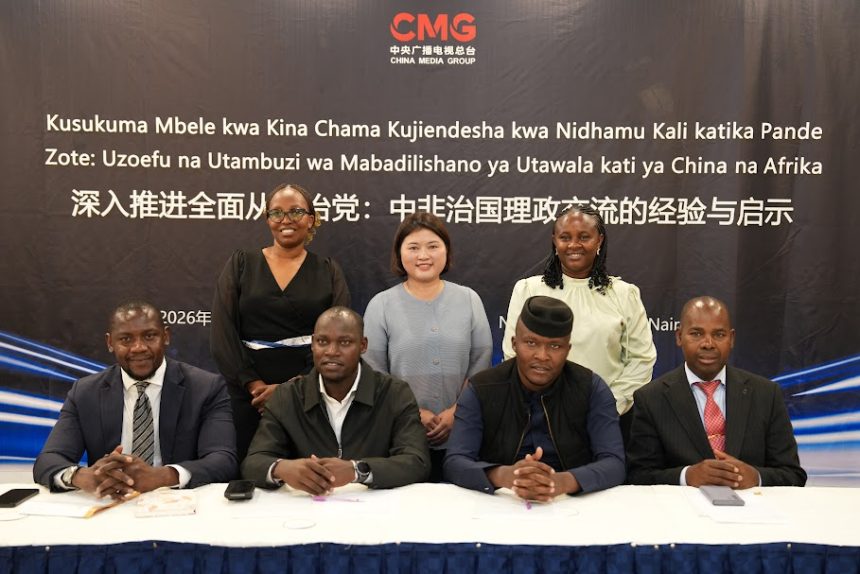
Kenyan scholars, political representatives, and youth leaders are advocating for stronger political institutions, enhanced accountability, and people-centred governance, drawing lessons from China’s approach to building and managing its political system.
Speaking at a round-table discussion in Nairobi, participants explored China’s governance experience and its relevance to African nations. They highlighted that the Communist Party of China (CPC) offers valuable lessons in organisational discipline, anti-corruption efforts, and long-term development planning.

The discussion, titled “Putting the People First and Upholding Full, Rigorous Party Self-Governance: Lessons from the CPC’s Approach to Governance for African Countries,” provided a platform to examine how China’s governance philosophy could inform institutional development across the continent.
Patrick Maluki, Chair of the Foreign Service Academy and an Associate Professor at the University of Nairobi, noted that China’s governance model is shaped by its history, state-building process, and political context. He stressed that African countries must identify adaptable practices without compromising constitutional safeguards, political pluralism, and accountability.
“Organisational discipline, long-term planning, oversight, and anti-corruption are areas that deserve consideration. They should be pursued in ways that protect pluralism, participation, and accountability.”Maluki stated
He observed that neither political continuity nor competition alone guarantees development, referencing the varied political experiences of Kenya, Tanzania, and Uganda. Maluki argued that governance effectiveness should instead be measured by how institutions exercise power, respond to citizens, and convert national resources into public benefits.
He further explained that the ‘people-first’ principle should be reflected in citizens’ daily lives, including access to essential services, employment opportunities, affordable living conditions, integrity in public office, and the ability to seek redress.
Rebecca Ndeto, a lecturer at Kenya Methodist University, identified corruption and institutional weaknesses as significant barriers to sustainable development. She asserted that governments must demonstrate a willingness to hold their own officials accountable.
Ndeto cited China’s anti-corruption campaign, often described as the fight against “tigers and flies,” as an example of how accountability can extend from senior officials to lower-ranking public servants.
“China’s campaign illustrates that a ruling party or government must possess the courage to police itself from within,” Ndeto remarked.
She added that African governments could learn from this approach by strengthening internal oversight and enforcing discipline across all levels of public institutions.
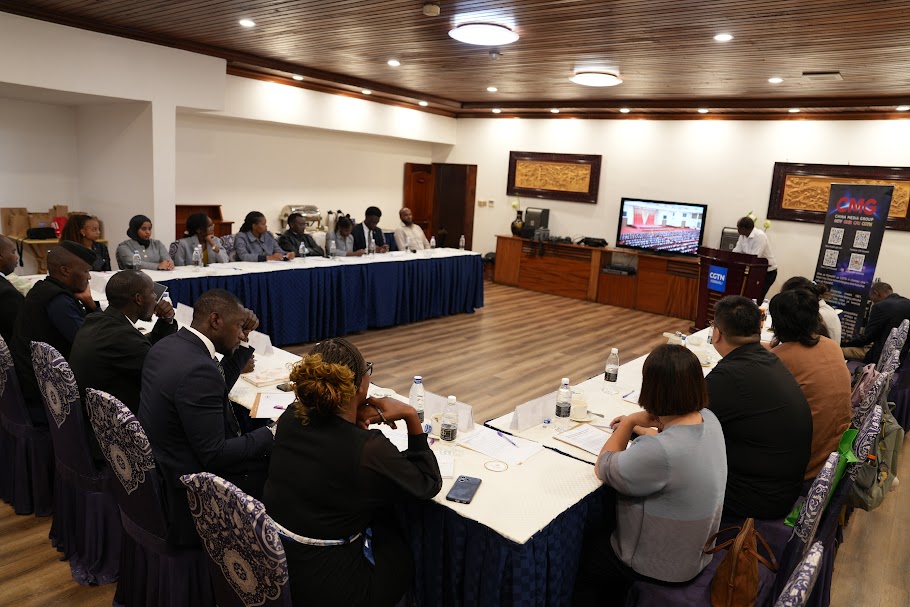
The discussion also included youth representatives from the ruling United Democratic Alliance (UDA), who noted that China’s experience provides useful lessons in political organisation and in building institutions capable of responding to citizens’ needs.
UDA Youth Affairs representative Kipkorir Brian said the party’s eagerness to learn from the CPC’s experience, citing its more than 100-year history and long-standing engagement with Africa. He believes this relationship offers an opportunity for Kenyan political leaders to understand how established political institutions maintain their organisational structures and pursue development objectives.
UDA youth leader Kidi Mwaga emphasised the link between government legitimacy and public support, arguing that political parties must remain connected to the aspirations of the people.
“We are struggling to alleviate poverty, to alleviate ignorance, and to make sure that disease does not undermine the potential of our people and of our country,” Mwaga stated.
He added that a government’s legitimacy depends on the consent of the governed, making it crucial for political parties to serve as vehicles through which citizens’ aspirations can be realised.
“We are therefore learning from our Chinese friends, the Communist Party of China, to ensure that our party is the instrument that carries that aspiration of the people,” he said.
Another UDA National Youth Leader Kariuki Ngunjiri highlighted the importance of this engagement for young people seeking to understand how disciplined political organisations can contribute to effective governance.
He welcomed the CPC’s contribution to UDA’s institutional learning, suggesting that exposure to its organisational experience could help strengthen party discipline and political management.