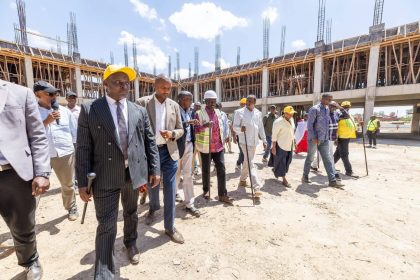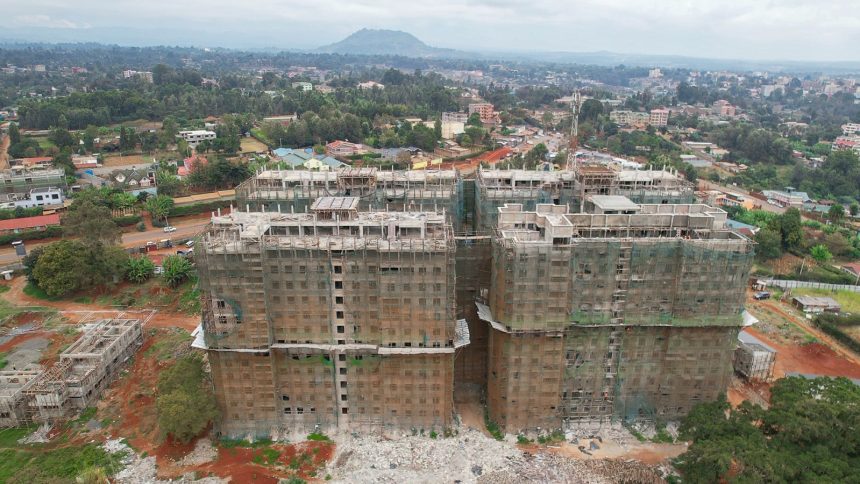
Ruring’u’s skyline is changing as an Affordable Housing Project takes shape, creating new prospects for families seeking decent and affordable homes in Nyeri.
Paul Wambugu has watched the transformation from the beginning.

“I have been here from when this building started from the ground. I have seen everything that has happened,” says Wambugu, who has worked on the project for about 68 per cent of its construction period.
Wambugu started as a casual worker doing formwork. Within about three months, his skills caught the attention of the project management, giving him an opportunity to take on more specialised responsibilities.
“Now I am a professional in formwork. There is nothing about formwork that I do not understand,” he says.
For the young worker, the project has provided more than employment. It has offered a pathway to develop practical skills and build confidence in a trade that can support him beyond the construction site.
His story reflects the wider employment opportunities emerging from the project, which currently engages an average of 250 to 300 workers, according to Gerald Kariuki, Project Clerk of Works from the State Department for Housing and Urban Development.
The Ruring’u Affordable Housing Project comprises four residential blocks containing 480 units across social, affordable and market-rate categories.
The blocks rise to 11 floors above ground, creating a distinctive high-rise development in an area where, Wambugu says, such buildings have rarely been seen.
“This is something we can be proud of. We have never seen houses this big in Nyeri,” he says.
The project is designed to address more than housing needs. It includes a primary school with 22 classrooms, each designed for 40 learners, giving the facility a planned capacity of 880 pupils. The school is intended to serve both future residents and the surrounding community, where access to schools is limited.
Four commercial blocks are also being constructed, providing 32 shops that are expected to support businesses and services for residents.
Kariuki says the project began on September 24 and has reached 69.5 per cent physical progress against 92 per cent time elapsed.
The development also includes parking, water infrastructure, security facilities, children’s play areas, playing fields, green spaces and paved access routes, creating a planned residential environment rather than housing blocks alone.
Wambugu believes the development will become increasingly significant as more people seek affordable homes in urban centres.
He imagines people who may not be able to build their own homes eventually purchasing units here, while others could invest in additional properties and generate rental income.
“It is still a business. The project has brought something big here in Nyeri,” he says.