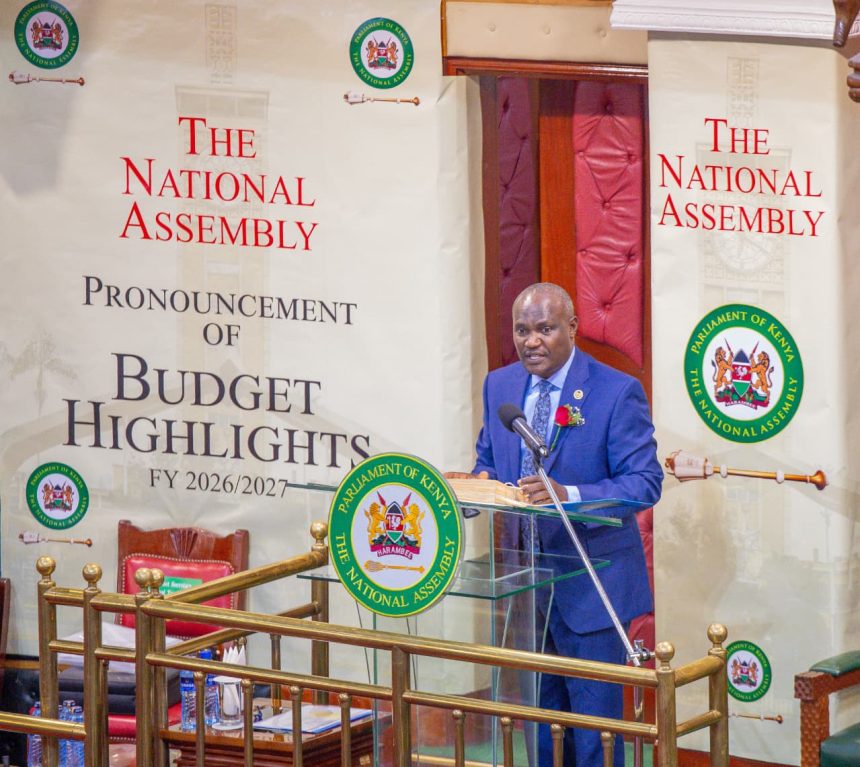
Village elders across Kenya are set to receive a government stipend for the first time after Treasury and Economic Planning Cabinet Secretary John Mbadi proposed a Ksh3.9 billion budgetary allocation for this purpose in the 2026/27 Budget, acknowledging their vital role in maintaining peace and order at the grassroots level.
Presenting the 2026/2027 Budget Statement in Parliament on Thursday, Mbadi stated the allocation aims to enhance local administrative capacities and recognize the often-overlooked contributions of village elders in addressing security and other societal challenges across the country.

“I have also proposed Sh3.9 billion for stipends to village elders to enhance local administrative capacities and to appreciate and recognize the role played by village elders in helping address security and other societal challenges,” Mbadi informed Parliament.
Interior and National Administration Cabinet Secretary Kipchumba Murkomen welcomed the initiative, confirming it fulfills a commitment made during the “Jukwaa la Usalama” public engagement forums conducted across the country.
Murkomen said village elders have consistently played a critical role in supporting community policing, mobilizing residents, and assisting security agencies, despite working on a voluntary basis for many years.
“I’m happy that thanks to Jukwaa la Usalama and our conversations with the Kenyan people, we have been able to ensure that village elders will now receive some level of support to enable them to dedicate their time to supporting community security,” Murkomen stated.
In April 2025, the Interior CS had revealed his ministry was developing a policy and regulatory framework to formally identify village elders and determine the best way to support them.
At the time, Murkomen noted that the proposal emerged prominently during the Jukwaa la Usalama forums held in all 47 counties, where citizens called for recognition and facilitation of village elders for their contribution to local security management.
He emphasized that while the government might not immediately place village elders on salaries, there was a need to provide some form of compensation to support their daily operations, including communication and mobilization within communities.
The stipend marks the government’s first significant financial commitment towards formal support for village elders, who have historically served as the crucial link between local communities, chiefs, and security agencies.
Commenting on the broader security allocations in the 2026/27 Budget, Murkomen affirmed the government’s commitment to modernizing security infrastructure, even as he acknowledged that some allocations still fell short of what was needed.
He noted that the ongoing equipment modernization program for security officers, the rollout of surveillance cameras in six major towns—Nairobi, Mombasa, Kisumu, Nakuru, Nyeri, and Eldoret—and investments in police station infrastructure and the police vehicle leasing program were all part of a comprehensive strategy to secure the nation from the top down and the bottom up.