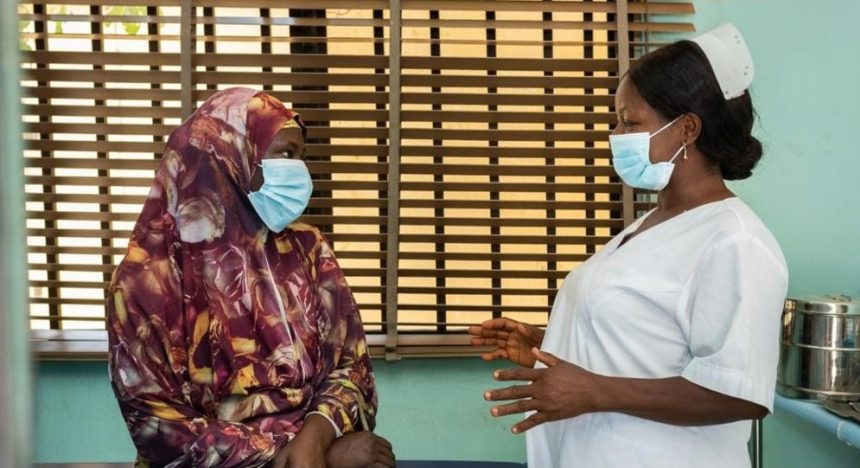
As the world marks Cervical Cancer Elimination Day, a new survey shows that only 19 per cent of Kenyan women aged 15-49 have ever been screened for the disease.
As the world marks Cervical Cancer Elimination Day on November 17, a new survey has revealed that only 19 per cent of Kenyan women aged 15-49 have ever been tested for the disease, exposing gaps in access to early detection across the country.

The 2025/2026 Kenya Mini Demographic and Health Survey (KMDHS) by the Kenya National Bureau of Statistics (KNBS) shows that women in urban areas are more likely to have been screened (21 per cent) than their rural counterparts (17 per cent).
The gaps are more pronounced across some counties, with Tana River, Garissa and West Pokot recording the lowest screening levels at 3 per cent each, followed by Wajir at 1 per cent and Mandera at less than 1 per cent.
The survey also shows that 59 per cent of women aged 15-19 have received at least one dose of the Human Papillomavirus (HPV) vaccine, which protects against the virus strains responsible for most cervical cancer cases.
However, vaccination coverage varies considerably across counties, standing at 88 per cent in Kitui, 83 per cent in Kilifi, 81 per cent in Vihiga and 80 per cent in Kericho.
Mandera recorded the lowest coverage at just 1 per cent, followed by Garissa at 8 per cent and Wajir at 9 per cent.
The survey further indicates that HPV vaccination coverage declines with age, from 75 per cent among 15-year-olds to 35 per cent among 19-year-olds.
“Overall, 59% of women age 15-19 have received at least one dose of the HPV vaccine, and 48% have ever received an HPV vaccination card,” the survey reveals.
School-based immunisation accounts for the largest share of HPV vaccinations, with 86 per cent of vaccinated women aged 15-49 receiving their most recent dose at school, while 12 per cent received it at a public health facility.
The findings come as the World Health Organisation (WHO) renews its call for stronger political commitment, sustained investment and equitable access to cervical cancer prevention, screening and treatment.
WHO says eliminating cervical cancer by 2030 will require countries to meet the 90-70-90 targets, which include vaccinating 90 per cent of girls against HPV by age 15, screening 70 per cent of women using a high-performance test by ages 35 and 45, and ensuring 90 per cent of women diagnosed with cervical disease receive appropriate treatment.