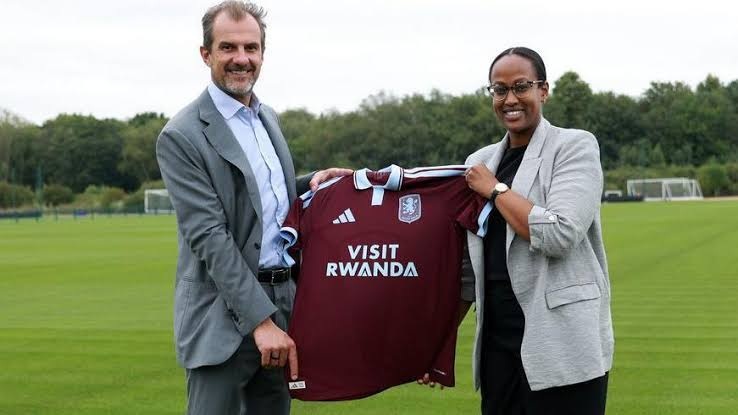
Visit Rwanda has agreed to become Aston Villa’s new front-of-shirt sponsor, in what the club describes as the most lucrative sponsorship deal in its history.

The partnership will see Visit Rwanda branding appear on the front of Aston Villa’s men’s, women’s and academy team shirts starting from the 2026/27 season.
The tourism board will also become the club’s Official Tourism Partner and Official Coffee Provider.
Visit Rwanda replaces Betano, which had been Villa’s front-of-shirt sponsor for the past two seasons.
The change comes as Premier League clubs move to voluntarily phase out betting and gambling brands from the front of their shirts starting in the 2026-27 season.
According to reports from The Athletic, the deal is worth up to £20 million ($26.8 million) annually if performance-related bonus clauses are met, marking a significant increase from what Betano had been paying.
This is not Rwanda’s first venture into Premier League sponsorship.
Visit Rwanda spent close to eight years as sleeve sponsor of Arsenal, a deal reportedly worth around £10 million per season in its final years, before it concluded at the end of the 2025-26 campaign.
Arsenal have since replaced Visit Rwanda with HR company Deel as their new sleeve sponsor.
Aston Villa’s president of business operations, Francesco Calvo, called the agreement “a very exciting partnership” and a sign of the club’s growing international presence.
Janet Karemera, chief executive of the Rwanda Convention Bureau, said the tourism board is looking to expand its reach to new audiences across the UK and Europe.
The deal arrives as Aston Villa look to grow their commercial revenue following their 2025-26 UEFA Europa League triumph, which secures them a place in next season’s Champions League.
The club’s recent accounts showed sponsorship revenue rising 31 percent to £28.6 million, with total commercial revenue up 69 percent to £70 million.