Government has intensified dengue response measures in Garissa and Wajir counties.
In a statement from Ministry of Health, communities have been urged to eliminate mosquito breeding sites, prevent daytime mosquito bites and seek prompt medical care for symptoms.

The health ministry noted that as at 26 August 2026, Garissa County had recorded 1,583 cumulative reported dengue cases, while Wajir County had recorded 95 laboratory-confirmed cases bringing the total to 1,678 cases.
Five suspected deaths have been also been reported in Garissa County; four in Garissa Township and one in Hagadera.
In Garissa, Dadaab accounts for the highest number of reported cases at 1,276, followed by Garissa Township with 251 and Fafi with 56 cases.
In Wajir, Wajir East accounts for 85 of the 95 confirmed cases, representing 89.5 per cent. The remaining cases have been reported in Eldas, Wajir West, Wajir North, Wajir South, Tarbaj and Khorof Harar.
Children and adolescents aged between six months and 15 years account for 46 of the confirmed cases in Wajir, representing 48.4 per cent.
Measures being implemented
The Ministry of Health, working with county governments and partners, has activated the Public Health Emergency Operations Centre, supported by continued county and sub-county coordination meetings.
Health facilities in affected areas have also been placed on high alert, while suspected dengue samples are being referred to the national reference laboratory for confirmation.
Further, the Ministry has strengthened case management and Infection Prevention and Control measures in affected health facilities as well as referral of suspected dengue samples to the national reference laboratory for confirmation, alongside priority investigation and classification of severe cases and suspected deaths.
Other measures being implemented include risk communication and community engagement focused on eliminating mosquito breeding sites, preventing daytime mosquito bites and encouraging early healthcare seeking.
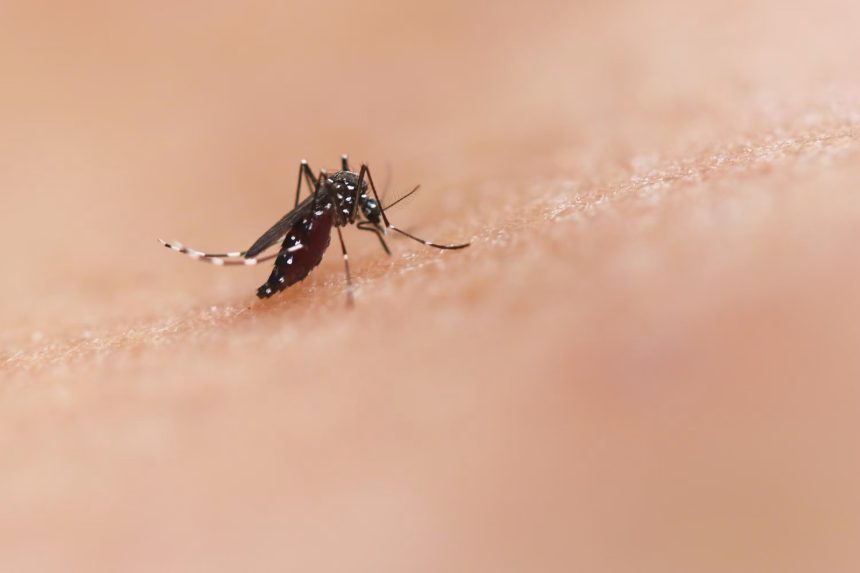
Dengue is transmitted mainly by infected Aedes mosquitoes, which commonly bite during the day and breed in small collections of stagnant water.
The Ministry has urged households, institutions and communities empty, scrub and tightly cover water-storage containers at least once each week, dispose of bottles, tins, tyres and other items that can collect water, and clear blocked drains, use mosquito repellent, long clothing and window or door screens, especially during the day, and protect children from mosquito bites.
Members of the public have also been advised to seek care promptly for fever, severe headache, pain behind the eyes, muscle or joint pain, nausea, vomiting or rash, get urgent medical attention for severe abdominal pain, persistent vomiting, bleeding, breathing difficulty, extreme weakness, restlessness or rapid deterioration.
These as well as use paracetamol for fever as directed by a health professional and avoid aspirin or ibuprofen because they may increase bleeding risk.
Although no new cases have been reported since the latest county updates, the Ministry has reiterated commitment in sustained surveillance before interruption of transmission can be verified.
It will continue working with county governments, health facilities, community health teams and partners to maintain clinical readiness, laboratory confirmation, vector control and timely public information.