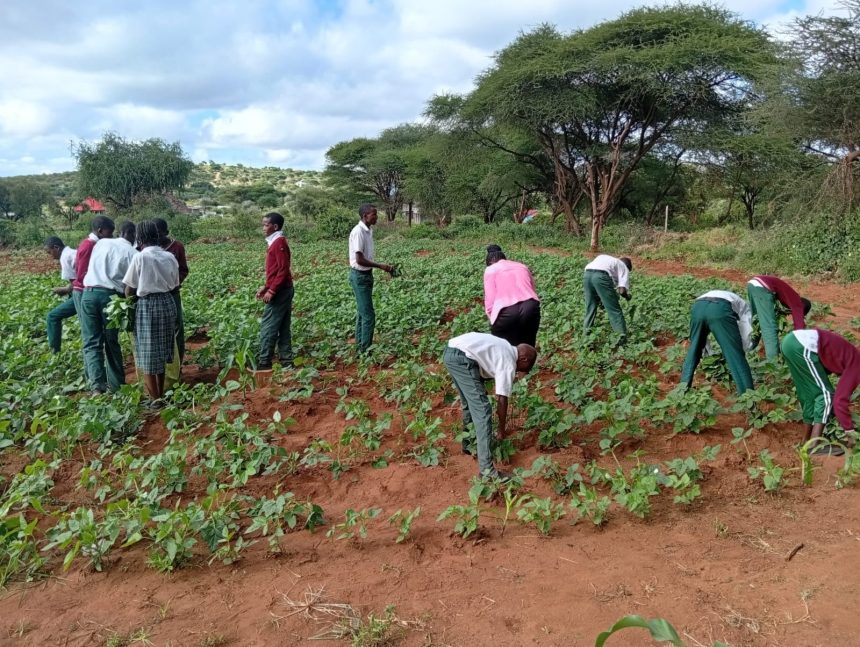
At Inaarok Lukuny Comprehensive School in Kenya’s Kajiado County, pupil enrolment has more than doubled over the past year, rising from 240 to more than 525 children.
The head teacher attributes much of that growth to a simple change: access to more nutritious school meals.

In a region where drought, food insecurity and poverty continue to challenge many families, a pilot initiative linking school-based food production with community training is helping to improve children’s diets while creating new opportunities for women farmers.
The work forms part of a wider initiative led by the Kenya Agricultural and Livestock Research Organisation (KALRO) and partners, including Imperial College London, Egerton University, government agencies and local community organisations, to strengthen school feeding systems in Kenya’s arid and semi-arid lands (ASALs). KALRO research identified challenges in school feeding including limited dietary diversity and difficulties maintaining reliable food supplies.
In response, four schools in Kajiado and Isiolo counties were selected in April 2025 to establish school farms.
The schools were selected because they faced food insecurity and also had land that could be used to grow nutritious foods.
Climate-smart school meals
The school farms test practical and climate-smart approaches to food production in drought-prone environments, including the use of manure to boost soil fertility, rainwater harvesting, and drought-tolerant crops such as high-iron Nyota beans, cowpeas and green grams.
At Inaarok Lukuny, what was once dry, uncultivated land has been transformed into a four-acre school farm. Today, the farm includes two acres of intercropped maize and beans, alongside plots of beans, green grams and African leafy vegetables. Produce harvested from the farm is used to supplement school meals, helping to diversify menus that traditionally relied heavily on externally supplied maize and beans.
For many children, it has introduced foods they had rarely eaten before.
“Most of us had never eaten cowpea, but I must confess it was very sweet,” enthuses one student. “The vegetables have improved the taste of our food.”
The initiative has also strengthened relationships between the school and the wider community. The parents, often pastoralists themselves, now contribute labour to the school farm and provide manure from their livestock to help improve soil fertility and they are more eager for their children to attend school.
“Education is not always a priority, especially during droughts,” explains Mukiri, Chairman of the School Board. “However, the changes we have seen through the school farm and feeding programme have encouraged more families to send their children to school.”
Building a network for change
The lessons emerging from the school farms are helping to shape wider efforts to transform food systems in Kenya’s drylands.
In May 2026, project partners launched Kenya’s Community of Policy and Practice (CoPP) on school feeding and regenerative agriculture. Led by KALRO, policymakers and local communities, the network aims to share lessons from the pilot farms and support wider adoption across Kenya’s ASALs.
“CoPPs have become a catalyst for food system transformation across Africa because they create ‘agents of change’ who have a common vision,” says Dr. Samrat Singh of Imperial College London.
Benefits beyond the school gates
The experience at Inaarok Lukuny highlights how school feeding can contribute to more than children’s nutrition. It can also strengthen livelihoods and build community resilience in areas facing increasing climate pressures.
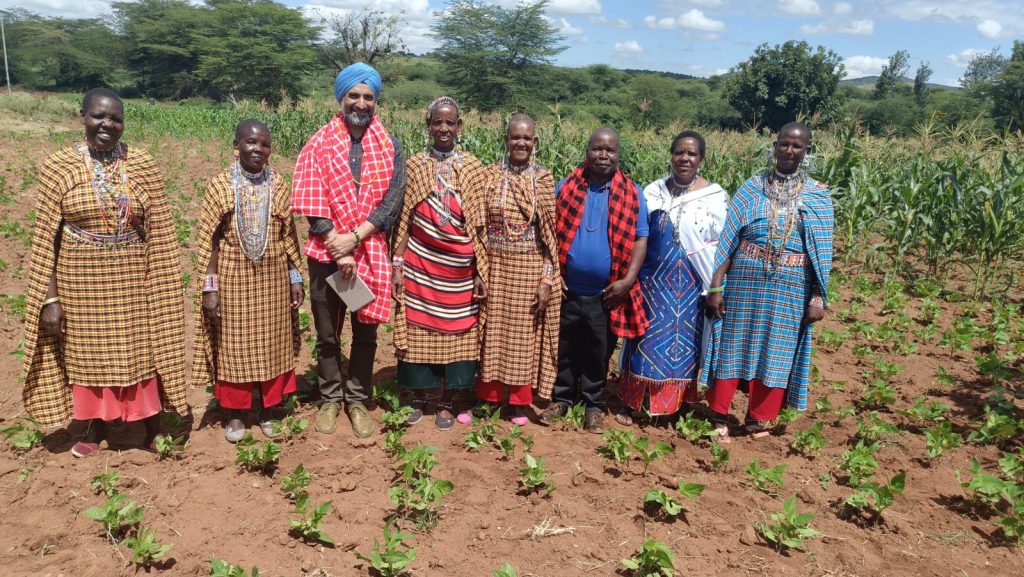
A short distance beyond the school gates, members of the Mashambani Women’s Group a farming cooperative whose main economic activity is the sale of milk are adopting many of the practices demonstrated at the school’s farm, which serves as a learning centre for the wider community.
The group, which includes around 30 women, attended the school farm for training in climate-smart approaches, including tied ridges for water conservation small earth embankments that help rainwater soak into the soil and grafting fruit tree seedlings to create stronger and more productive trees.
“Group members have embraced dairy farming since they now understand how to produce silage (preserved livestock feed for use during droughts),” explains Grace Martine, Vice Chairperson of the Women’s Group.
Community leaders, such as local chief Stephen Malei, say the school farm initiative is also strengthening women’s role in household decision-making and income generation.
He explains that members of the Mashambani Women’s Group each cultivate around one acre of Nyota beans and cowpeas during good rainy seasons. Collectively, they produce an estimated 40 bags per season, generating around KES 550,000 (USD 4,200) in revenue.
“In the past, we depended only on livestock, but now this climate-smart farming project gives households both food and income,” says Malei.
 Looking ahead
The next phase of the initiative aims to expand the production of nutritious crops, including Nyota beans, cowpeas and green grams, to additional schools and women’s groups across the region. The newly launched CoPP will help scale this approach to more schools and communities.
While challenges remain, particularly around water access and the long-term sustainability of the school farms, the experience in Kajiado County shows how school feeding programmes can do more than provide a daily meal. By connecting schools and communities especially women producers, they can improve nutrition, strengthen livelihoods and build more resilient food systems.