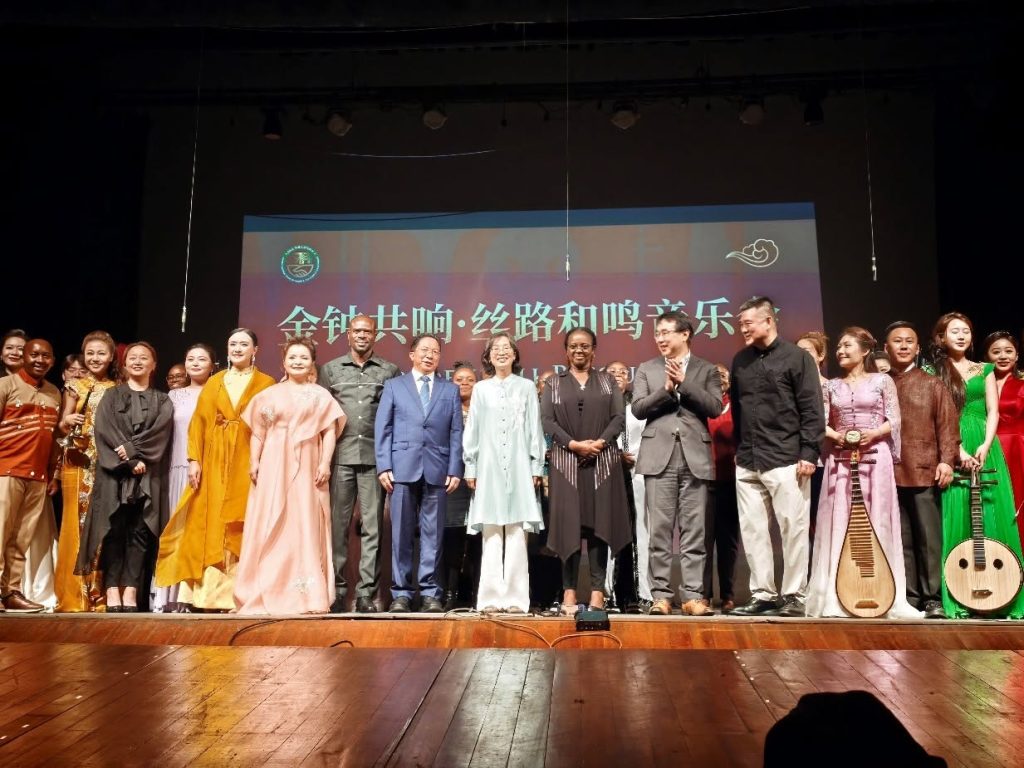
Music took center stage at the Kenya National Theatre as Chinese and Kenyan artists shared a stage to celebrate cultural diversity, mutual learning, and closer people-to-people connections, underscoring music’s role in strengthening China-Africa relations.
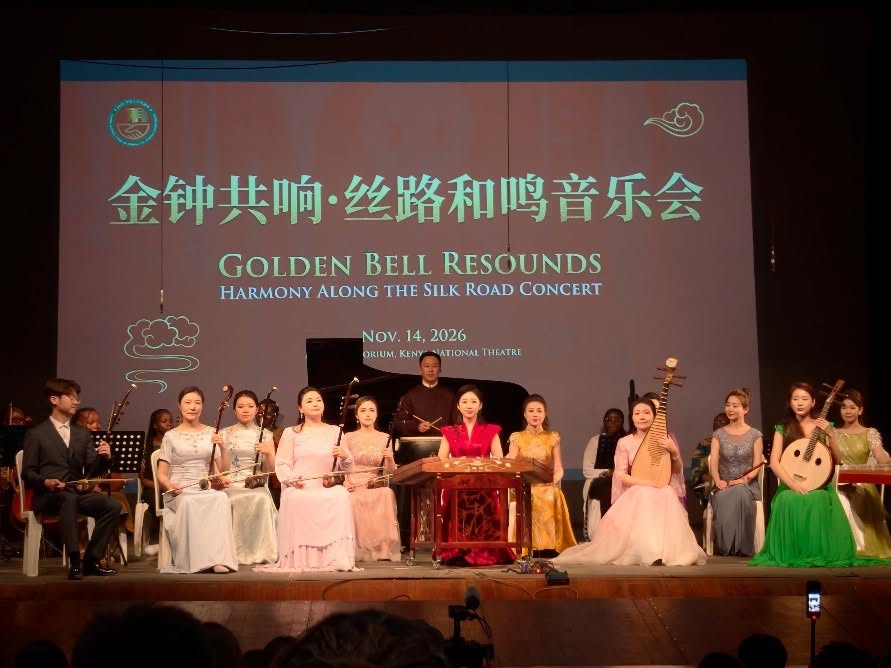
The concert, titled “Golden Bell: Sharing the Silk Road Through Musical Harmony,” united the Beijing Golden Bell Star Art Troupe with African musicians. This cultural collaboration aimed to deepen artistic ties and foster understanding between the two regions.

The performance formed part of activities marking the 2026 China-Africa Year of People-to-People Exchanges, an initiative designed to expand cultural interaction, encourage dialogue between civilizations, and strengthen friendship between Chinese and African communities.
Attendees included Chinese Ambassador to Kenya Guo Haiyan, Charge d’Affaires at the Chinese Embassy Zhang Zhizhong, and Kenyan government officials.
Ma Xinming, Deputy Chairman of the Beijing Federation of Literary and Art Circles, briefed the media, stating that the visit aimed to bridge Chinese and African people through the universal language of music.
He explained that the China-Africa people-to-people exchanges initiative reflects a significant consensus reached between Chinese President Xi Jinping and African leaders, with cultural interaction serving as a pathway for mutual learning and shared progress.
“The main objective of China-Africa people-to-people exchanges is to promote mutual learning and understanding between different civilizations, encourage cultural interaction, and achieve shared progress,” Ma affirmed.
He observed that both China and Africa possess rich and ancient civilizational traditions, making cultural engagement between them particularly meaningful.
Ma highlighted continuity, inclusiveness, and peaceful coexistence as defining characteristics of Chinese civilization, while acknowledging Africa’s contribution to global cultural development and its historical significance as one of the cradles of human civilization.
He specifically praised African music for its global influence and its creation of lasting cultural memories among Chinese audiences.
The Nairobi concert, he added, provided a unique opportunity for musicians from both sides to exchange experiences, learn from each other, and explore new avenues for artistic collaboration.
Beyond the immediate performance, Ma expressed his hope that the visit would establish enduring channels for cultural exchanges, encouraging African artists to visit China and Chinese performers to engage more frequently with their African counterparts.
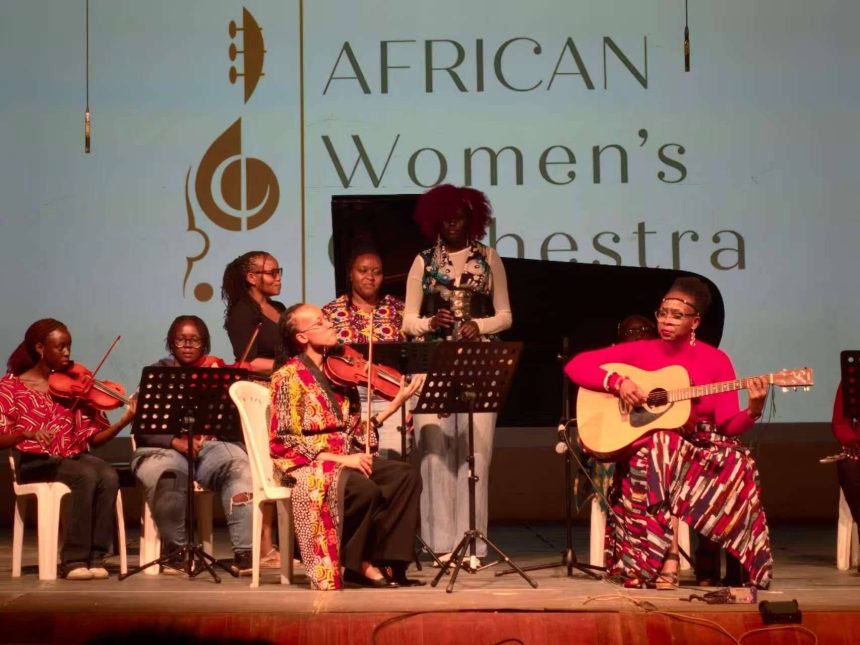
The collaboration held particular significance for the African Women’s Orchestra, which performed alongside the visiting Chinese musicians.
Wandiri Karimi, co-founder of the African Women’s Orchestra, described the partnership as the beginning of a new chapter in artistic cooperation, following the signing of an agreement with the Chinese government. She called the joint performance a milestone, as it marked the orchestra’s first time performing with Chinese musicians.
Karimi explained that the orchestra was founded to provide a safe and inclusive platform for women to be seen, heard, and given opportunities to engage with artists from diverse countries and cultural backgrounds.
“Today, we were teaching one another how to play our respective instruments, and it was such an exciting experience,” she shared, emphasizing that the partnership offers an opportunity to expand the orchestra’s international engagement while increasing visibility and access to cross-cultural artistic experiences for African women musicians.
The Chinese delegation featured some of the country’s distinguished performers from the Central Conservatory of Music and the China Conservatory of Music, two leading institutions in China’s music education.
Among the featured performers was renowned soprano Wu Bixia, a professor and doctoral supervisor at the China Conservatory of Music, who presented traditional Chinese vocal works.
She introduced the Yunnan folk song ‘Xiao He Tang Shui,’ also known as ‘The Flowing Little River,’ describing it as a traditional piece that reflects the country’s rich musical heritage.
Bixia noted that the group, known as Stars of the Golden Bell, comprised leading Chinese musicians whose expertise spans traditional instruments and vocal performance. The program also showcased a range of traditional Chinese instruments, including the guqin, pipa, erhu, suona, guzheng, yangqin, and sheng, offering audiences an introduction to the country’s diverse musical traditions.
The 70-minute concert was organized by the Beijing Federation of Literary and Art Circles and presented by the China Performing Arts Agency. Its collection was specially adapted to be accessible to African audiences while highlighting China’s diverse ethnic cultures and musical heritage.